

MAURI.
WELCOME. WE’RE SO GLAD YOU’RE HERE!
Creating ‘The Flying Canoe’ has been such a joyful experience, and we’re delighted to be sharing it with you.
Before you and your students step into the world of ‘The Flying Canoe’, we want to introduce ourselves and share some tips on how to get the most out of this audio-theatre adventure.
You can watch the video below, or read a transcript HERE.

-
‘The Flying Canoe’ follows the story of a cheeky and charming apprentice magic spinner, Nei Konoia - and invites you and your students to join her on a journey that will take you all the way to the islands of Kiribati!
Nei Kinoia comes from a long line of Magic Spinners, but on the night she was supposed to become one herself, she got distracted singing in the Frangipani tree!
Now she plans to turn back time and trick the spirits of Neiko into giving her their blessing to join her ancestors in spinning magic!
The only thing is, she needs someone to take her there FAST.
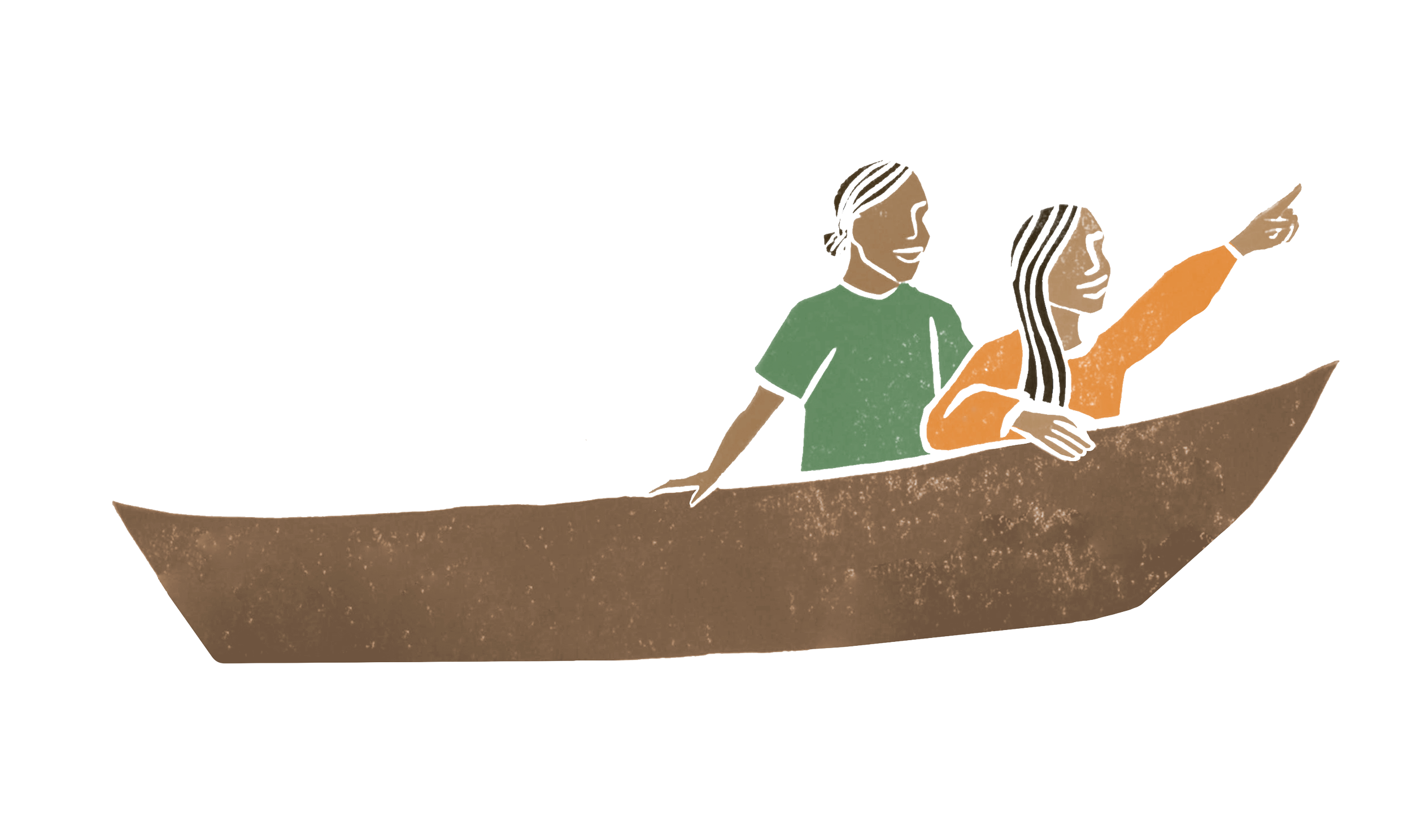
A regular canoe won’t do the trick, she needs one to fly, and she needs your help to fly it!
Together you’ll meet some sassy, salty spirits, fend off giant mud crabs, and dive into crystal blue waters. You will hear the sounds of Kiribati and hopefully, hopefully…you’ll help Kinoia become the magic spinner she was born to be!
-
NEIKO: (pronounced Nay-ko)
An island full of magic, stories, myths, spirits and adventure. Neiko is circular with a lagoon in the middle, which means that wherever you are on the land, you are always close to the ocean and lagoon. A place where fish fly, saltwater tastes sweet and time can play tricks, you always have to stay on your toes. But be careful, you never know who may be watching…
NEI KINOIA: (pronounced Nay Ki-noy-a)
A cheeky, smart and easily distracted apprentice magic spinner who loves to sing in the frangipani trees on the island of Tarawa, a coral atoll and the capital of Kiribati. She is desperate to become a fully qualified Magic Spinner and needs help to take a journey back in time in a magic flying canoe.
THE MOON: A young, yet wise character who watches carefully over Nei Kinoia and adventurers. Through rhymes, she narrates along the way with magical knowing and curious observation.
THE SPIRITS: There are four spirits who protect the island of Neiko.
Spirit of the Lagoon side: Surrounded by turquoise water, the first Spirit of the island is strong, and a little bit bossy. Her voice undulates like a canoe on the water, her joyful character is infectious, and her laugh is never far away. Like a Frigate bird, the Spirit of the Lagoon harnesses the power of the wind.
Spirit of the South: Suspicious of tricksters, sometimes a little jealous and cranky, the Spirit of the South is a stern protector of Neiko. She is direct and commanding and expects visitors to introduce themselves and follow the rituals of the island. With the power to turn people into stone, she will only do so to the visitors who do not show respect for the land. But if you do respect the land? She will give you encouragement, thoughtful advice and look out for you along your journey.
Spirit of the Ocean side: With its fast-moving water, the Spirit of the Ocean Side is the strongest of them all. Slithery, slippery and eel-like, she relies on her sense of smell to work out what people are like and while she is helpful, she is also a bit of a trickster!
Spirit of the North: Found near the beautiful clear ocean waters, the fourth guardian of Neiko, the wise and level-headed Spirit of the North is kind, encouraging and values honesty. Deeply respected by her sister Spirits, the Spirit of the North holds the power to grant visitors their final welcome to Neiko. She loves singing about the moon and swimming in the deep waters and knows so much about the fish and sea life that live there.
ADVENTURERS:That would be you! You are the crew on Nei Kinoia’s flying canoe that will take her to the island of Neiko to visit the spirits and help her become a magic spinner.
-
While there are multiple themes threaded throughout the story of ‘The Flying Canoe’, the themes are intertwined, just like the strands of coconut fibre Kiribati women use to make rope to hold the canoes together.
WE USE THE THINGS WE HAVE IN REACH
Kiribati people have a strong connection to the environment. Drawing on generations-old traditional skills, people in Kiribati use the things they have within their reach to sustainably and resourcefully create all that they need for daily life including building, fishing, play and dancing.
STRANGERS ARE ALWAYS WELCOME
With community at the heart of Kiribati culture, strangers are always welcome.
On arrival, guests are greeted with a welcome ritual that teaches them how to enter Kiribati culture with respect and be a good guest during their stay.
WE ARE SURROUNDED BY OCEAN
People from Kiribati have an enduring relationship with the ocean. It is their livelihood, and fosters community, self-sufficiency and resilience. The remoteness of Kiribati and the prevalence of water allow for exploration and adventure, and the surroundings help guide Kiribati people as they navigate their journey.
KIRIBATI SINGING IS THE BEST SOUND IN THE WORLD
Kiribati singing is the best sound in the world. Immensely proud of their identity, customs, language and culture, song is vital to the Kiribati people’s way of life to share stories and distinguish their identity.
Song and dance also connect Kiribati communities to their homeland when they have moved away.
ALL TOGETHER NOW
Community is fundamental to Kiribati culture; everyone is valued and no one is ever left behind.
Everything happens in Kiribati with the support of others, and each person has a role to play within the community and their family.
THE CANOE
Surrounded by ocean and made of up 32 coral atolls and 1 raised coral island, canoes are vital to the day-to-day livelihood, travel and sustenance of Kiribati people and recognise the resilience of Kiribati people and their inherent skills as master navigators.
Traditionally and precisely built from natural resources at hand, canoes are also historically and culturally important. They symbolise the significant role each member of the canoe and the Kiribati community play and that no one is ever left behind.
SPINNING MAGIC
Central to Kiribati customs, magic pays respect to the laws of the land. Magic is a sacred and special skill and knowledge that is passed down through family blood lines, and each family has their own magic speciality.
While not everyone in Kiribati learns magic, everyone respects and knows that magic is part of community life.
Magic could be used to read the weather, in childbirth or to understand someone’s illness.
The magic spinning used in ‘The Flying Canoe’ is not real magic but a representation of how magic is used in Kiribati, and more like how we might use a game like Rock, Paper, Scissors to choose who will go first in a game.
-
FOUNDATION: role, focus and movement
YEAR 1-2: role, situation, focus, movement and space
YEAR 3-4: role, situation, focus, movement, space, language, place and relationships
YEAR 5-6: role, situation, focus, movement, space, language, place, relationships, time and tension
-
RELATIONAL THEATRE
blurs the lines between audience and actor
participants relate to each other throughout every part of the adventure
IMMERSIVE THEATRE
invites participants to step inside and outside the action
allows participants to immerse themselves experientially in the action
performed in a space that connects with participants, rather than being performed in a traditional theatre space
-
GENERAL CAPABILITIES
Critical and Creative Thinking
Intercultural Understanding
Literacy
CROSS-CURRICULUM PRIORITIES
Asia and Australia’s Engagement with Asia
Knowing Asia and its diversity
AAK1: People of the Asia region are diverse in background, experiences, stories, religions, beliefs and perspectives.
Growing Asia-Australia engagement
AAG1: Australia’s developing and deepening relationships with the peoples of Asia influence both mutual understandings and expressions of citizenship and culture nationally, regionally and globally.
Sustainability
Systems
SS2: Sustainable patterns of living require the responsible use of resources, maintenance of clear air, water and soils and preservation or restoration of healthy environments.
-
'The Flying Canoe' is a Threshold experience created by Marita Davies, Lucy Harris, Zoë Barry, Tahli Corin & Sarah Lockwood.
It features the voices of Bobby Macumber, Teaote Burabura Davies and Matari McKenna as well as performances by members of the Kiribati community in Victoria. It was recorded on the unceded lands of the Taungurung people, in Kyneton.
Cultural consultation for the audio experience was provided by Teaote Burabura Davies, Cassandra Walton & Katerina Teaiwa.
The educational resources have been created by education specialist Melissa Newton-Turner with support from the Kiribati Ministry of Education and the Kiribati Teachers College.
Additional photography and videography provided by Victor Itaea.
>CLICK HERE< for more information about the creative team.
WHAT WILL YOU NEED
FOR YOUR ISLAND ADVENTURE?

A class of adventurers

Good speakers (preferably portable)
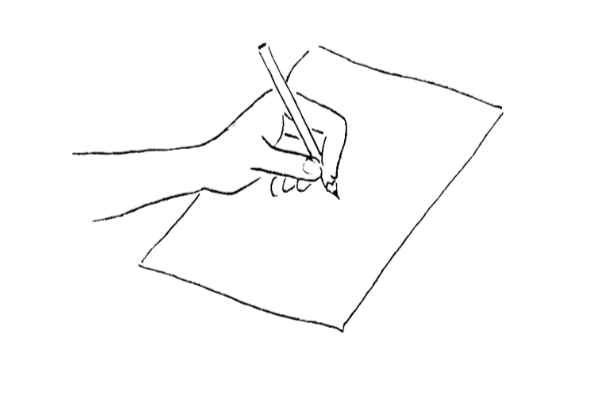
Paper and pencil (for every 4-5 people)

Smart Board or Projector
HEADS UP!

Floral gifts for the Spirits
(Episode 1)
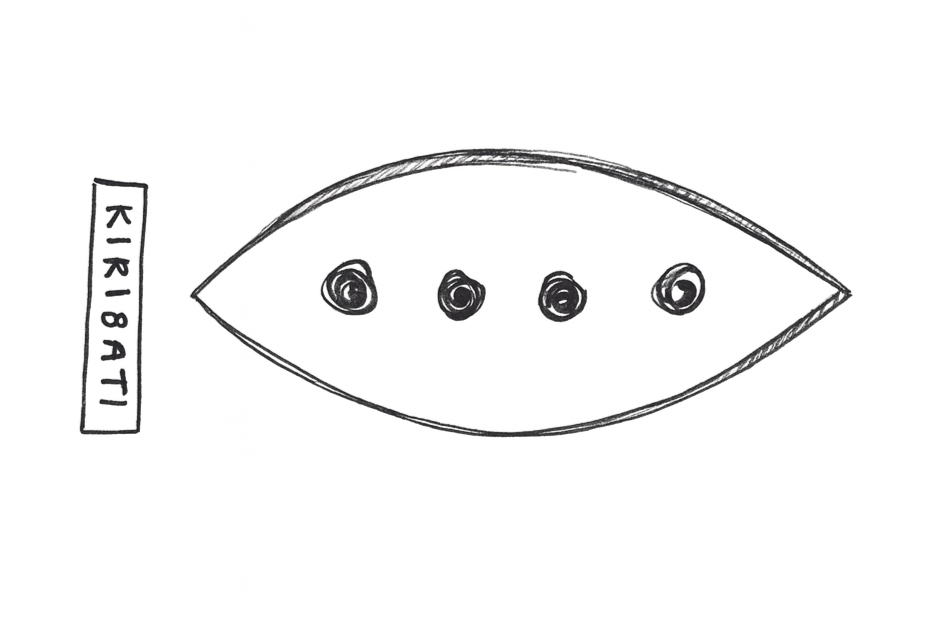
A canoe for every 4 - 5 people
(Episode 2)
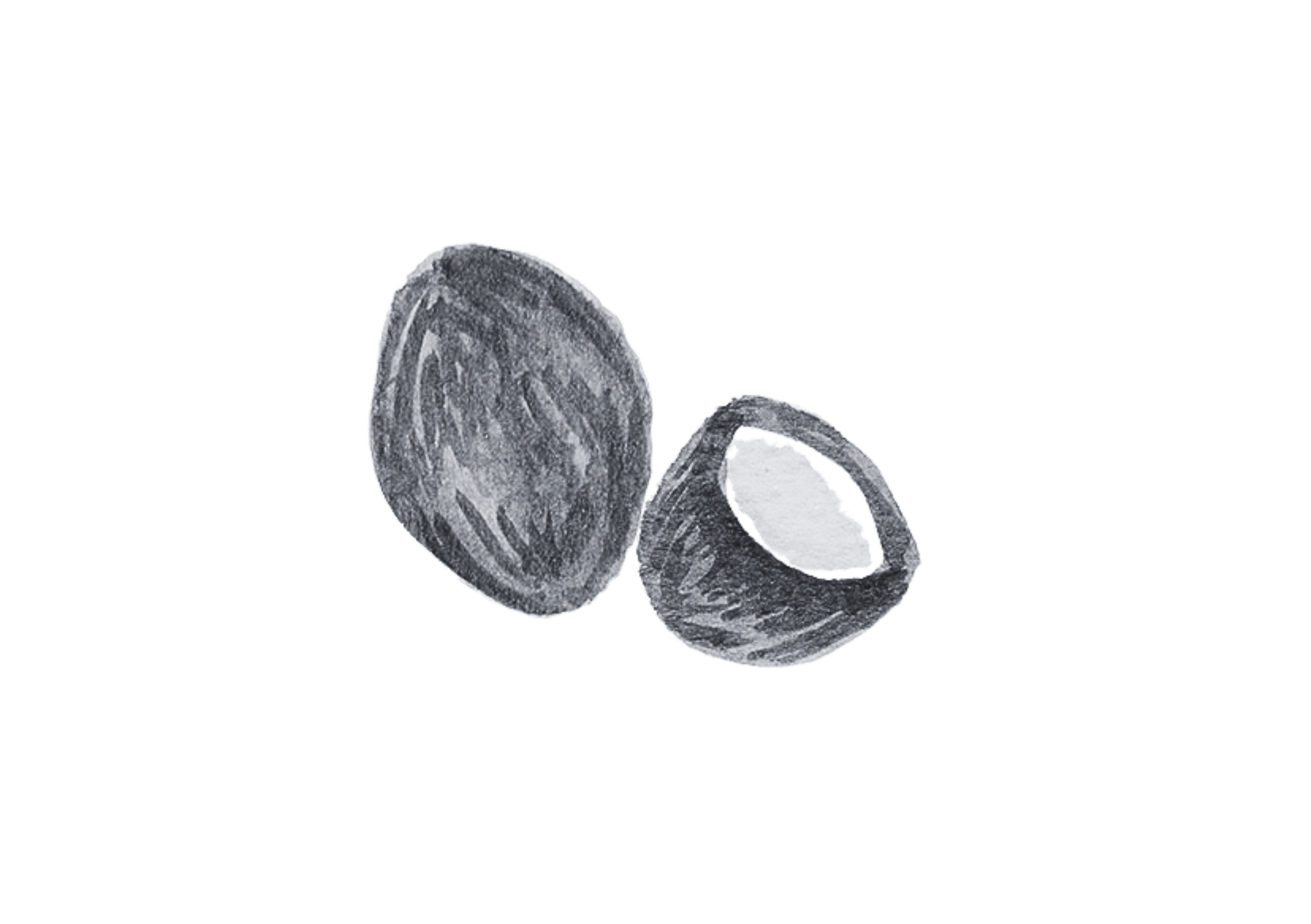
A companion for the adventure.
(Episode 2)
As a class you will also need to create some floral gifts, canoes and a companion for the adventure.
These are included in the resources - so be sure not to skip these activities, as you will need them for your journey.
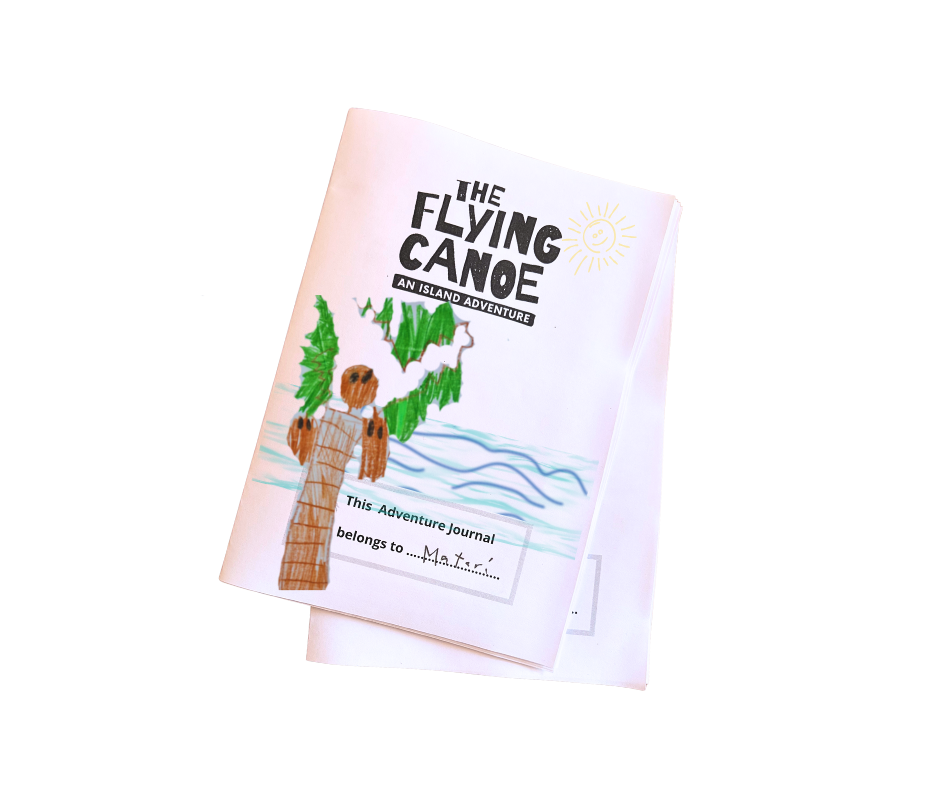
DOWNLOAD THE ADVENTURE JOURNAL FOR YOUR CLASS!
We’ve prepared an Adventure Journal that students can use as they complete the different learning opportunities that accompany each episode of ‘The Flying Canoe’.

PLEASE TAKE NOTE:
-
‘The Flying Canoe’ is a wonderful way to learn about another culture and it helps us reflect on other cultures that exist in our communities.
While ‘The Flying Canoe’ is a made up story, it has been guided and inspired by many traditional Kiribati stories and people. Great care has been taken to be respectful of Kiribati culture. The creative team has made sure to create an experience that is engaging, educational and respectful.
We ask everyone to join in on ‘The Flying Canoe’ journey with love, warmth and joy; bring your curious selves and embrace your introduction to Kiribati culture.
• In Kiribati, the canoe is incredibly important to the family. Of course, you are not building a real canoe, but we encourage you to value your classroom canoes with the same respect, importance and gravitas. It is a valued member of your classroom!
• While the spirit characters in this story are fictional, they are based on real stories that are held to the highest regard in Kiribati. Please encourage your students to listen to them carefully to nurture a feeling of importance.
• When dancing, don’t worry about trying to dance in an ‘islander way’. Just dance with joy!
A resource we encourage teachers to also refer to is Dr Teresia Teaiwa’s The Classroom as a Metaphorical Canoe: Co-operative learning in Pacific Studies. Dr Teaiwa is of Kiribati, Banaban and African American heritage.
While learning about Kiribati culture, it’s great to keep in mind the Indigenous land that you, your students and your classroom sits on.
Dr Terri Janke’s book, True Tracks provides clear guidelines to respectfully incorporate Aboriginal and Torres Strait Island culture and knowledge into your classroom. Janke, T. (2021). True Tracks : Respecting Indigenous Knowledge and Culture (1st ed.). NewSouth Publishing.
-
A big part of Kiribati culture is the belief and respecting of magic and spirits. It is part of the foundation of why Kiribati is so unique and has a rich culture that is still alive today.
For as long as Kiribati has been around, the stories of magic and spirits have been there. These stories and beliefs guide how Kiribati people live, solve problems, find food, create art, music and dance, and also travel safely between atolls.
This magic and the spirits are deeply connected to the land and the ocean. Spirits hold stories and people respect these stories to guide their interaction with the land, ocean, sky and community. The spirits vary from atoll to atoll and when visiting, it is expected that the spirits and custom of that land is respected.
Different kinds of magic is passed down through family members which means that some families specialise in canoe-building magic, while others specialise in song-making magic. There is magic for navigation, love, health, architecture, performance, food and many other things that are part of every day life.
When you put this all together, it forms a community of people who hold special skills and knowledge for different needs as well as ensuring that their interactions with the land, sea and sky are always respectful.
-
Kiribati people live on the frontline of climate change and rising sea levels - however, in the Kiribati language, there is no word for climate change.
Kiribati people live alongside the ocean - reading weather patterns and tides. Being I-Kiribati is about intimately knowing the land you call home and doing all you can to protect it. Culture, family, stories, land, sea and sky are woven together.
As we learn about Kiribati, it is important to understand that the people who live on the frontlines of climate change, are often not the reason for the change of the earth's climate.
Marita has always tried to share stories of Kiribati so that people can learn the culture, traditions and people first. Only then, can we truly connect with the threat of the country disappearing.
‘The Flying Canoe’ doesn't specifically mention climate change because what comes first is a mutual coming together to exchange stories and a deeper understanding of Kiribati.
READY?
FOLLOW THE LINKS BELOW
FOR YOUR CLASS MENU
The educational resources for ‘The Flying Canoe’ have been carefully conceived and prepared in collaboration with drama educator and consultant Melissa Newton -Turner.
While much of the content is similar, the educational resources and curriculum links have been adjusted to align with the appropriate year levels.


SYNOPSIS
‘The Flying Canoe’ follows the story of a cheeky and charming apprentice magic spinner, Nei Konoia - and invites you and your students to join her on a journey that will take you all the way to the islands of Kiribati!
Nei Kinoia comes from a long line of Magic Spinners, but on the night she was supposed to become one herself, she got distracted singing in the Frangipani tree!
Now she plans to turn back time and trick the spirits of Neiko into giving her their blessing to join her ancestors in spinning magic!
The only thing is, she needs someone to take her there FAST.
A regular canoe won’t do the trick, she needs one to fly, and she needs your help to fly it!
Together you’ll meet some sassy, salty spirits, fend off giant mud crabs, and dive into crystal blue waters. You will hear the sounds of Kiribati and hopefully, hopefully…you’ll help Kinoia become the magic spinner she was born to be!

CHARACTERS
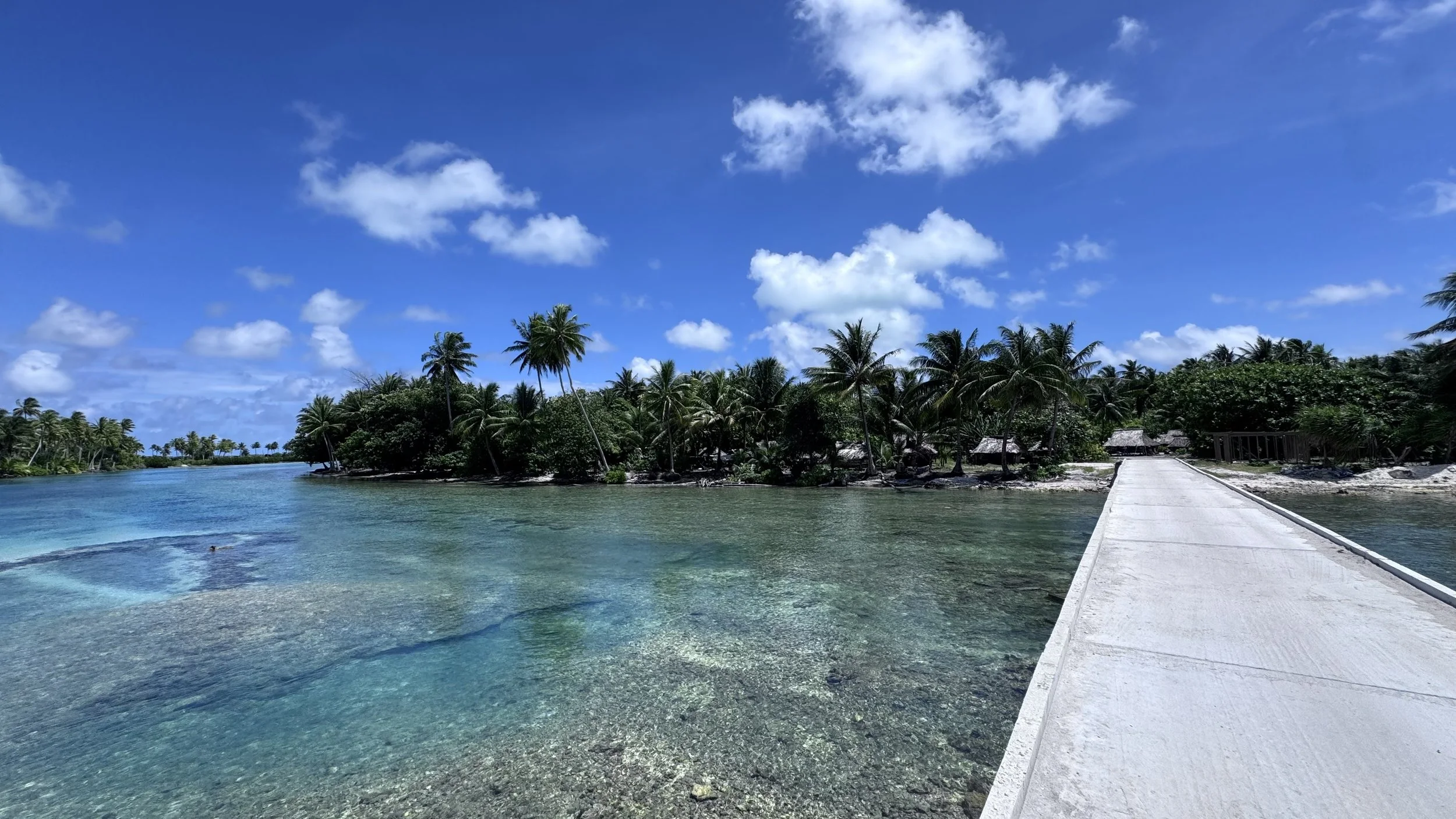
NEIKO (pronounced Nay-ko) is an island full of magic, stories, myths, spirits and adventure. Neiko is circular with a lagoon in the middle, which means that wherever you are on the land, you are always close to the ocean and lagoon. A place where fish fly, saltwater tastes sweet and time can play tricks, you always have to stay on your toes. But be careful, you never know who may be watching…
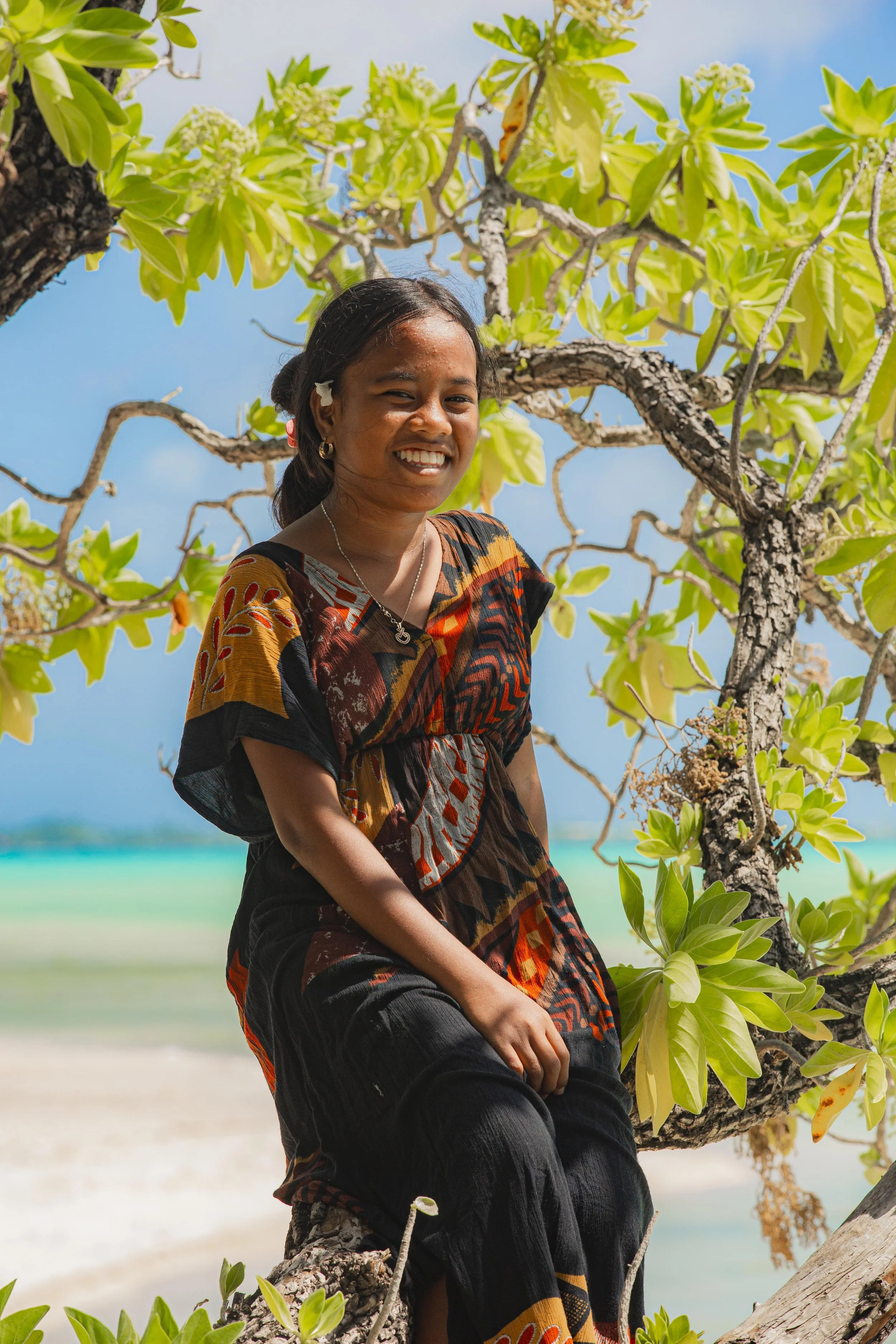
NEI KINOIA (pronounced Nay Ki-noy-a) is a cheeky, smart and easily distracted apprentice magic spinner who loves to sing in the frangipani trees on the island of Tarawa, a coral atoll and the capital of Kiribati. She is desperate to become a fully qualified Magic Spinner and needs help to take a journey back in time in a magic flying canoe.
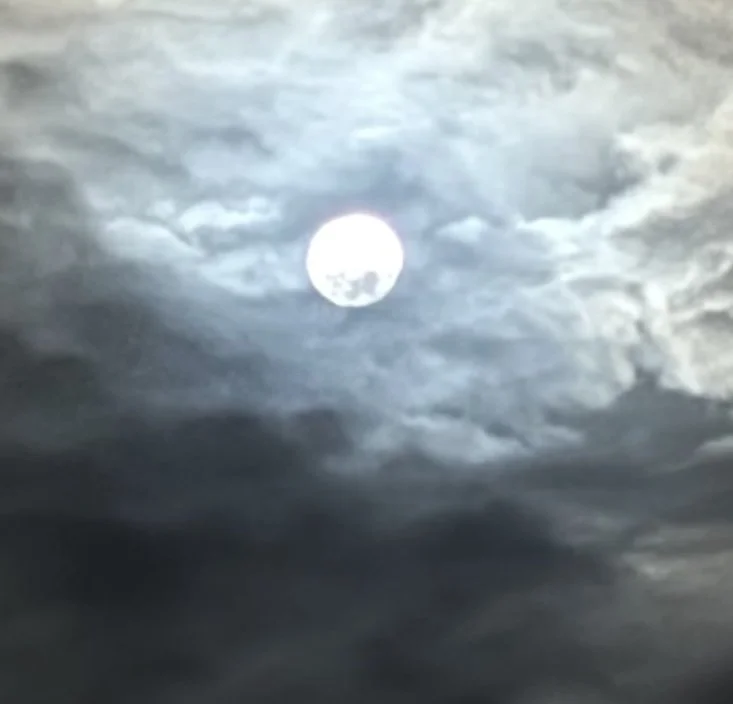
THE MOON is a young, yet wise character who watches carefully over Kinoia and adventurers. Through rhymes, she narrates along the way with magical knowing and curious observation.
THE SPIRITS
THERE ARE FOUR SPIRITS WHO PROTECT THE ISLAND OF NEIKO
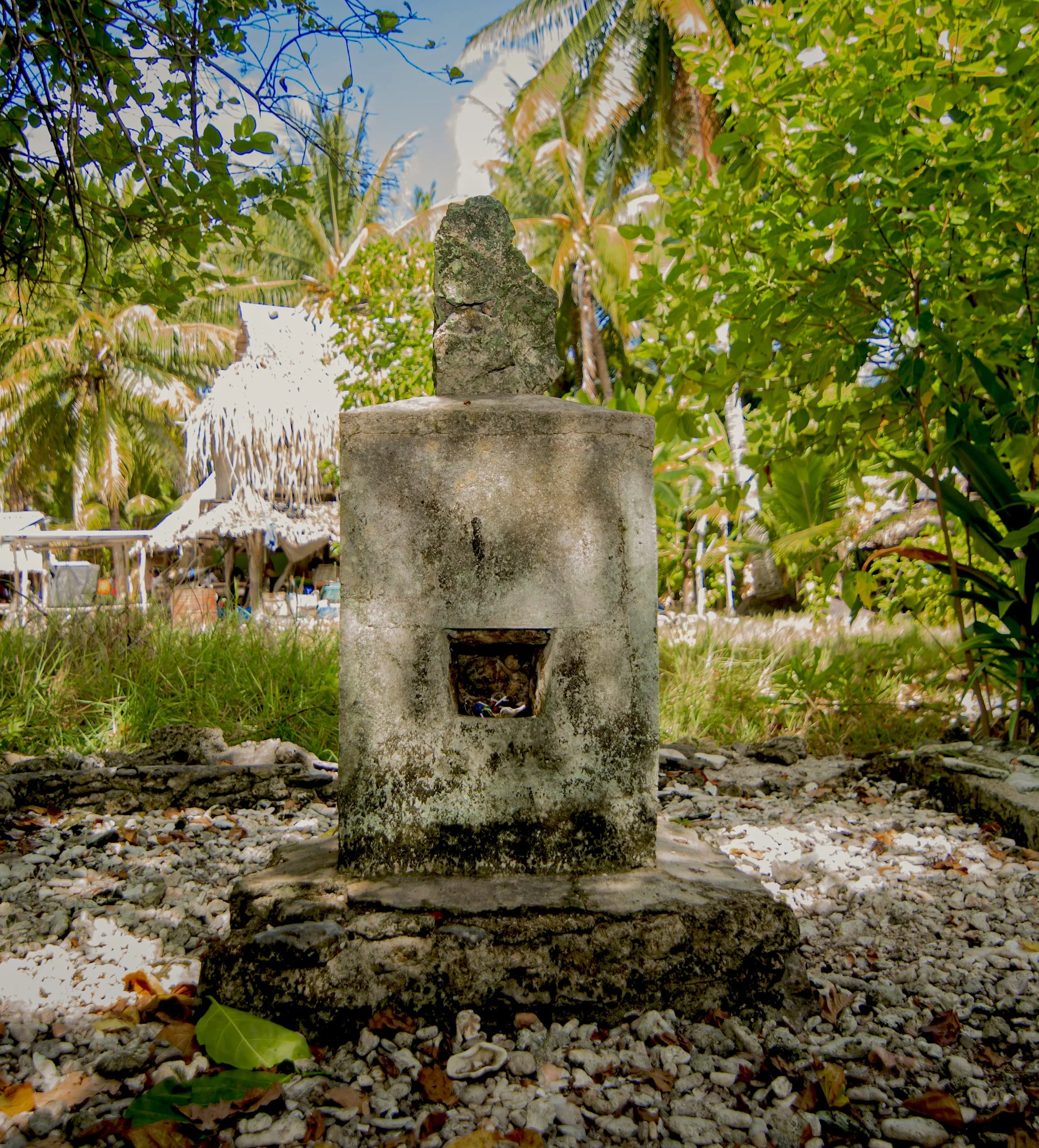
THE SPIRIT OF THE LAGOON SIDE: Surrounded by turquoise water, the first Spirit of the island is strong, and a little bit bossy. Her voice undulates like a canoe on the water, her joyful character is infectious, and her laugh is never far away. Like a Frigate bird, the Spirit of the Lagoon harnesses the power of the wind.
This spirit is based on the real story of Nei Reei of Marakei.
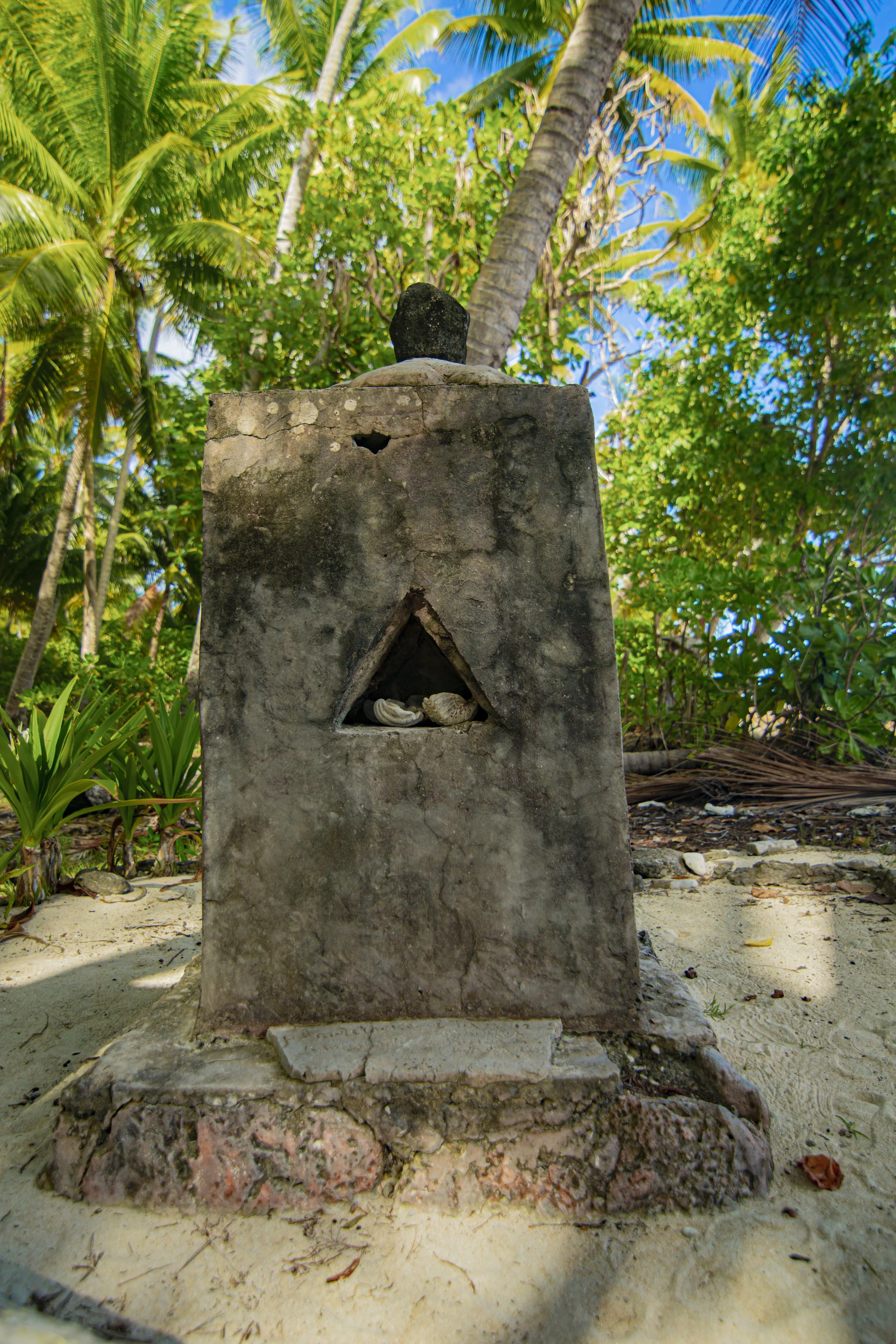
SPIRIT OF THE SOUTH: Suspicious of tricksters, sometimes a little jealous and cranky, the Spirit of the South is a stern protector of Neiko. She is direct and commanding and expects visitors to introduce themselves and follow the rituals of the island. With the power to turn people into stone, she will only do so to the visitors who do not show respect for the land. But if you do respect the land? She will give you encouragement, thoughtful advice and look out for you along your journey.
This spirit is based on the real story of Nei Rotebenua of Marakei.
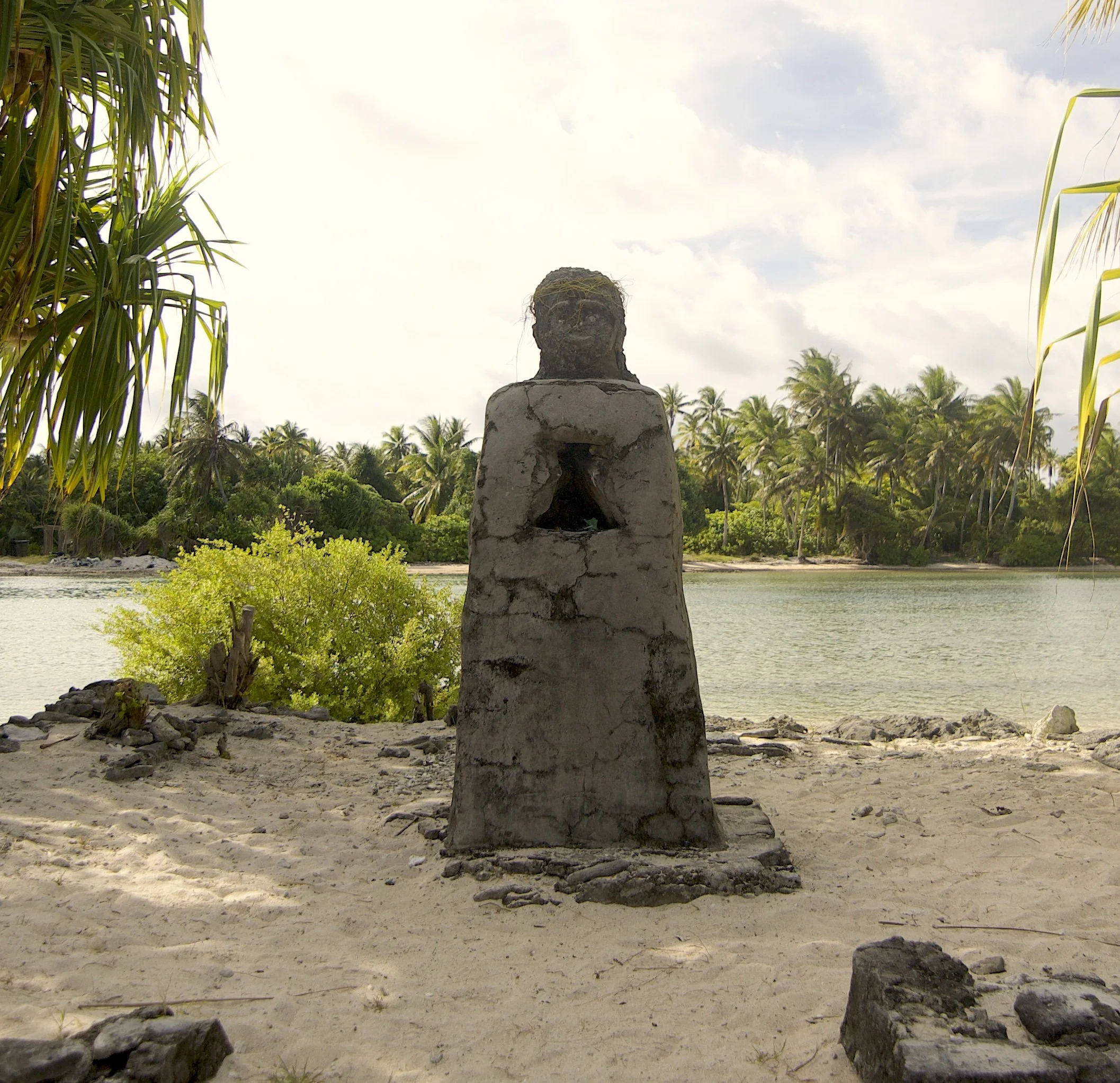
SPIRIT OF THE OCEAN SIDE: With its fast-moving water, the Spirit of the Ocean Side is the strongest of them all. Slithery, slippery and eel-like, she relies on her sense of smell to work out what people are like and while she is helpful, she is also a bit of a trickster!
This spirit is based on the real story of Nei Tangangau of Marakei.
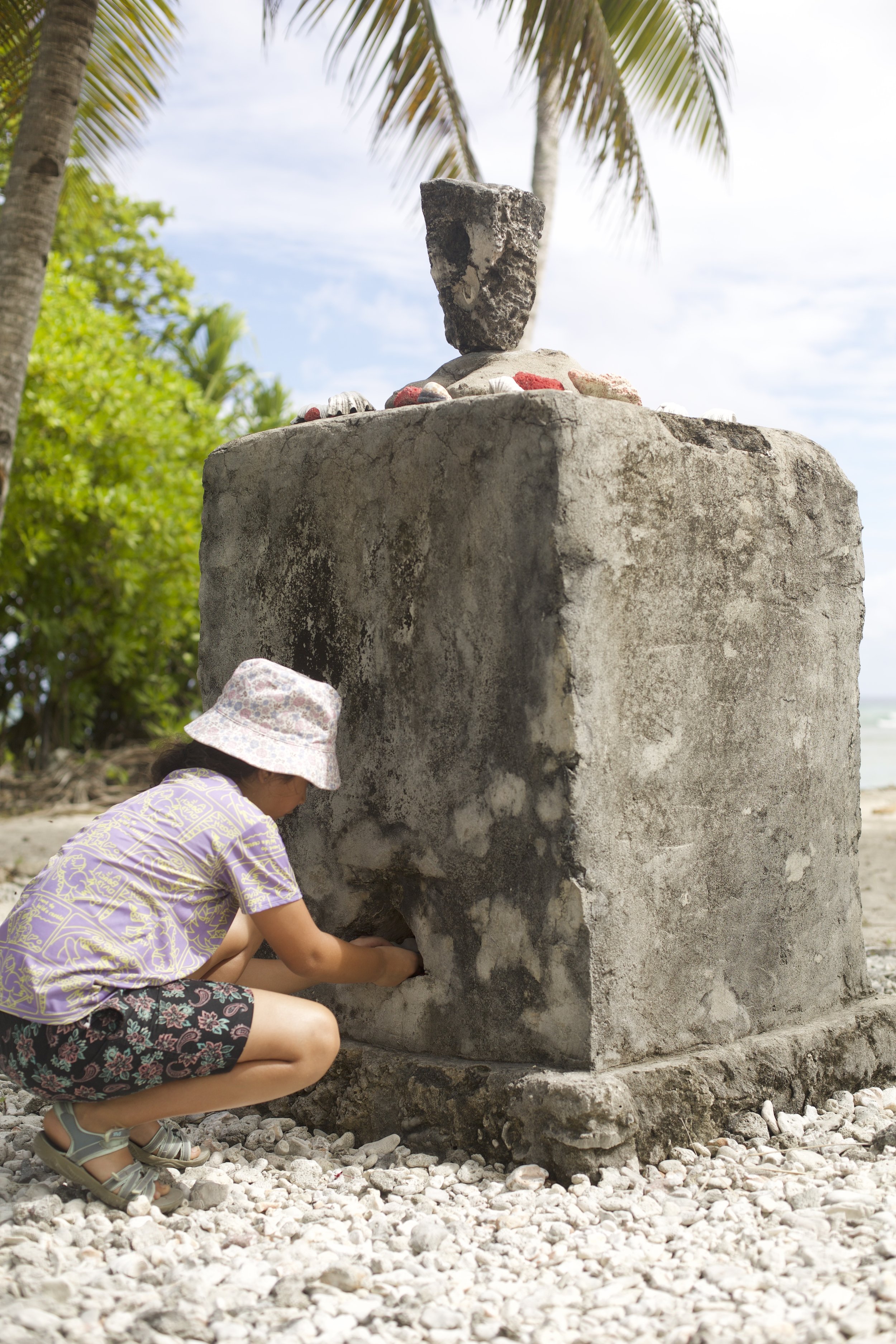
SPIRIT OF THE NORTH: Found near the beautiful clear ocean waters, the fourth guardian of Neiko, the wise and level-headed Spirit of the North is kind, encouraging and values honesty. Deeply respected by her sister Spirits, the Spirit of the North holds the power to grant visitors their final welcome to Neiko. She loves singing about the moon and swimming in the deep waters and knows so much about the fish and sea life that live there.
This spirit is based on the real story of Nei Nantekimam of Marakei.
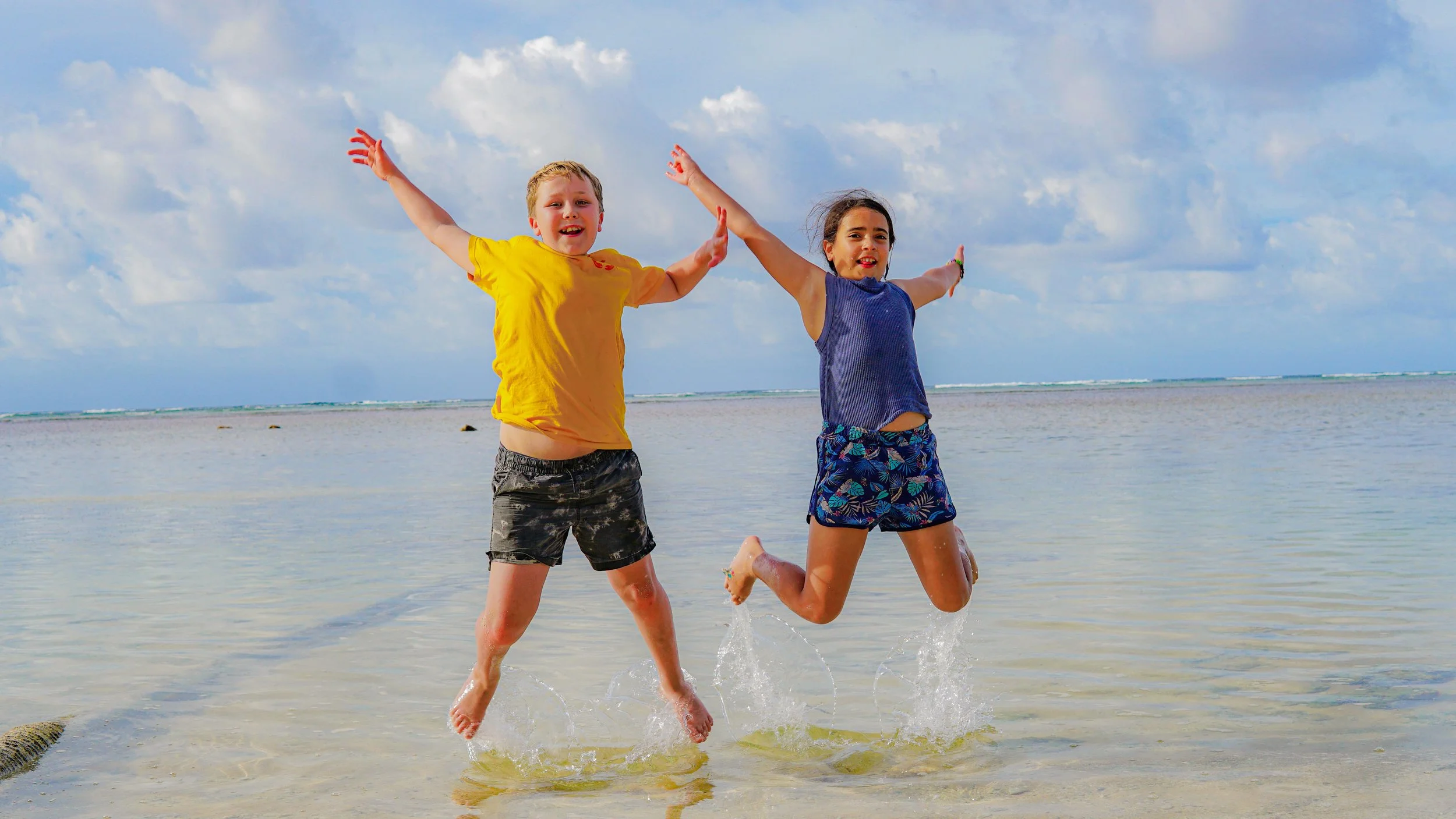
ADVENTURERS: That would be you! You are the crew on Nei Kinoia’s flying canoe that will take her to the island of Neiko to visit the spirits and help her become a magic spinner.