WELCOME BACK ADVENTURERS!
HERE WE ARE, TOGETHER AGAIN! ARE YOU READY TO SET SAIL?

THERE’S LAND AHOYA!
-
Themes: We are surrounded by ocean; The canoe
Someone in your class can read out the following micro-meditation, or you can listen to the audio link below.
—
Close your eyes.
Listen…..
Imagine….
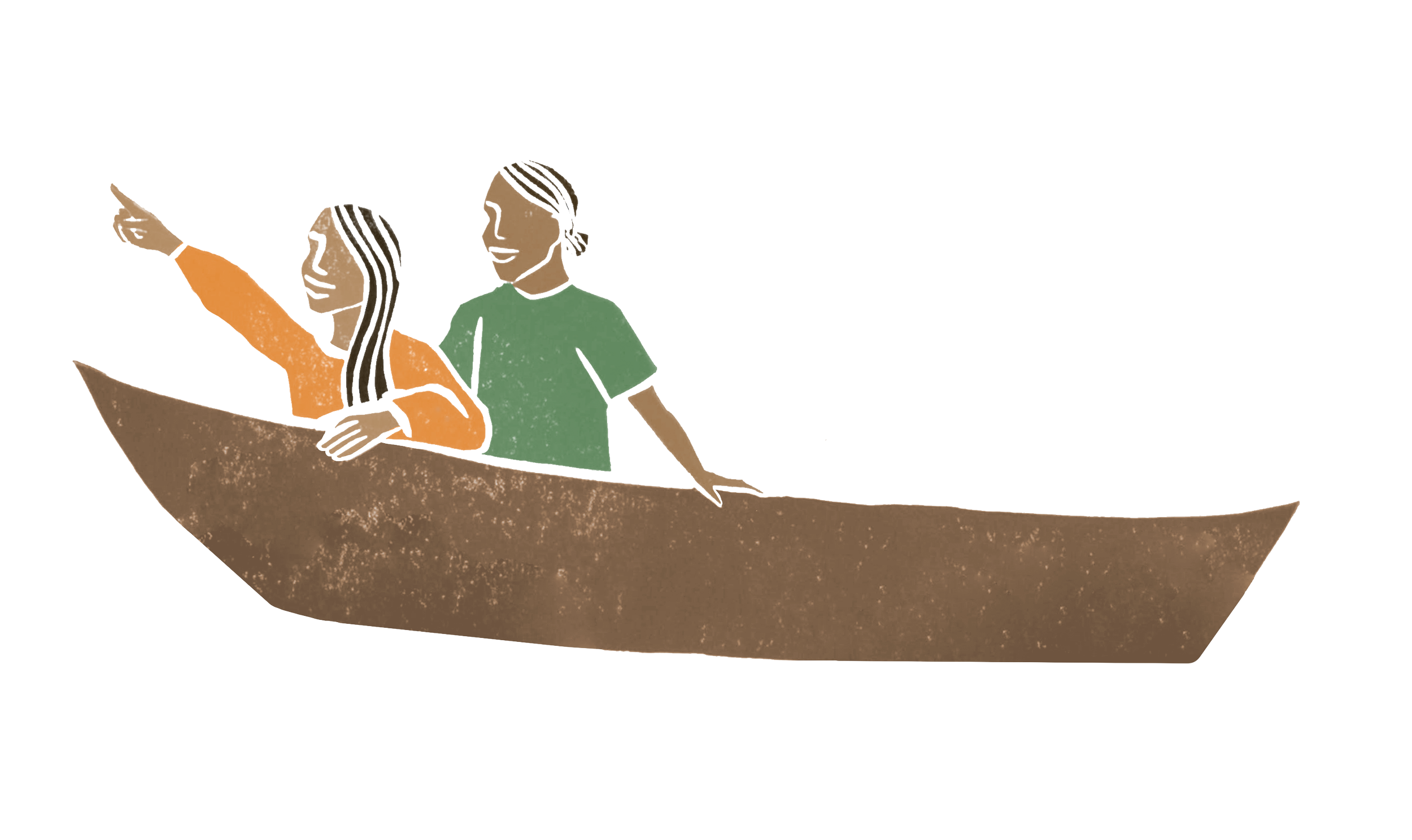
Imagine you are sitting in a canoe, in the middle of the lagoon.
Take a deep breath.
You feel a gentle breeze brush up against your cheek.
Take another breath.
Your canoe is gently rocking on the water.
This way. That way.
This way. That way.
Can you hear that? There are sea birds calling across the sky. They can see your canoe from high up above.
You’re a tiny dot floating on bright blue ribbons of soft waves.
The water is calm. The sun is so warm. The breeze is soft and cooling.
Take another big breath and when you are ready, gently open your eyes.
CURRICULUM LINKS
The Arts / Drama: AC9DR2D01 Use the elements of drama and imagination in dramatic play and/or process drama
Do you remember seeing Nei Kinoia singing in the tree?
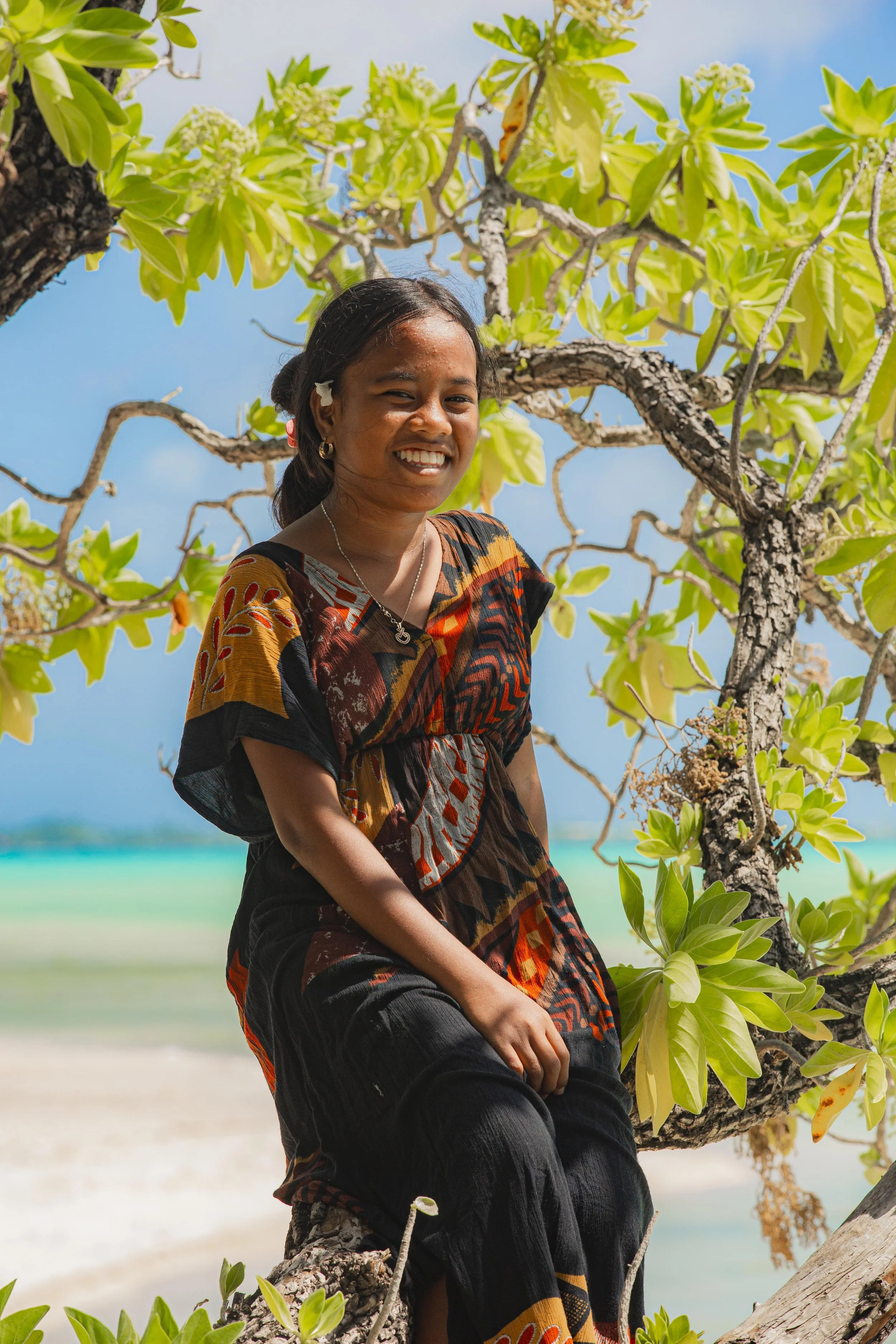
Well...she should have been on a canoe to Neiko instead!
Now she’s missed it, and she needs your help!
Listen in carefully to see what you can do to help her become the magic spinner she is destined to be.

HOW ARE YOU GOING TO GET TO NEIKO?
In Kiribati, there is more water than there is land, so it’s vital to have a way to travel on water. That’s why canoes are really important.
Every day canoes (and boats) are used to sail out on the ocean and catch fish to eat, to connect with people on other islands and to take adventures.
You have to have special skills to make a canoe. It’s a craft that is often handed down through families.

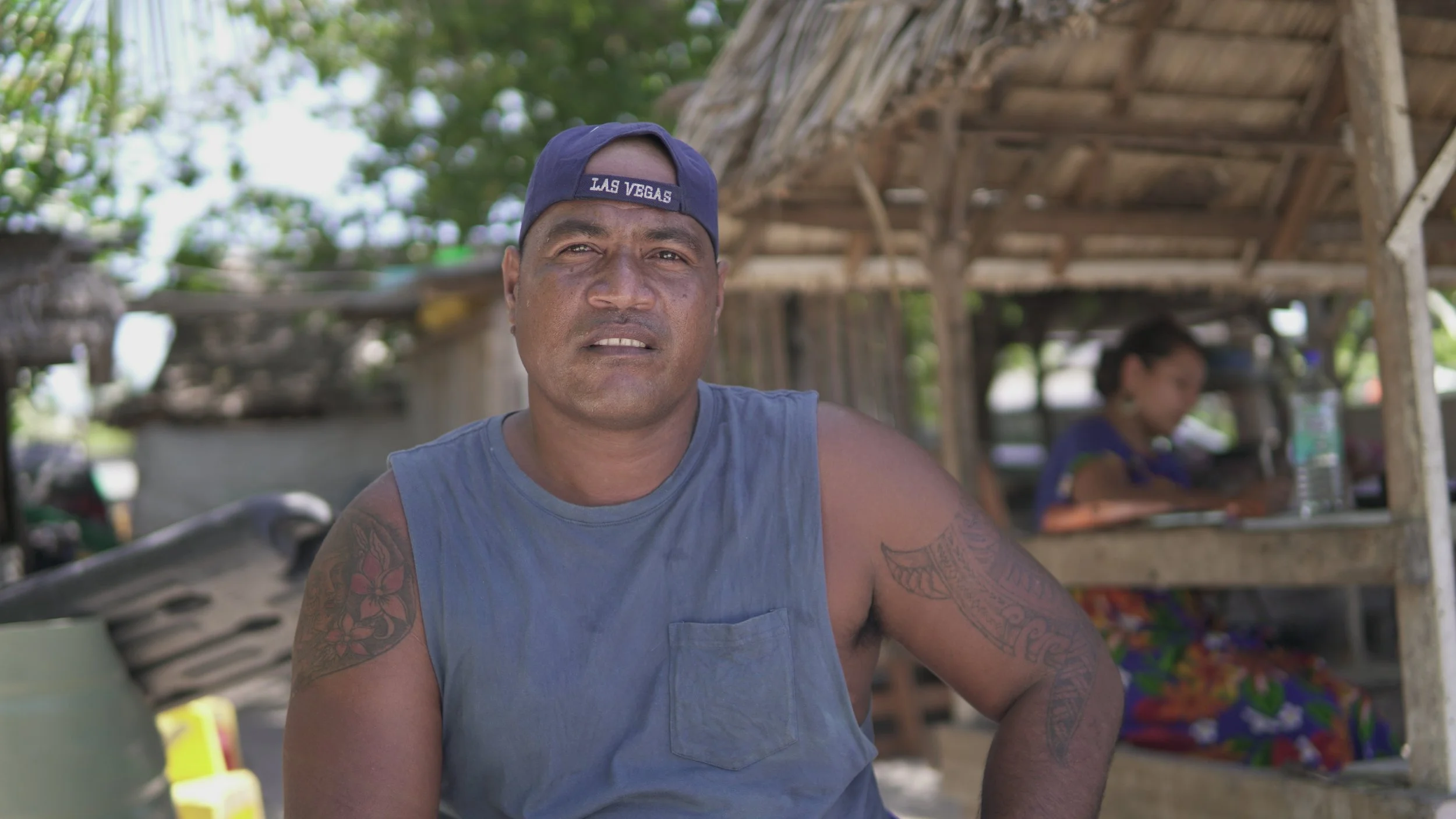
Na Mangoia learned how to make a canoe from his father, when he was 20 years old.
“The canoe to the family is very important. You go about your work - but you know that your canoe is nearby.
When you want some fish, you go out to the sea and come back with it. That is how useful the canoe is to us.”
— Na Mangoia, canoe builder

WHY ARE CANOES SO VALUABLE IN KIRIBATI?
Senior Curriculum Officer of the Kiribati, Ministry of Education - Raobeia shares his perspective on the value of the canoe in Kiribati. His interview is accompanied by footage of a canoe crossing from Buota to Abatoa.
IN KIRIBATI, IT IS A COMMUNITY EFFORT TO BUILD A CANOE.
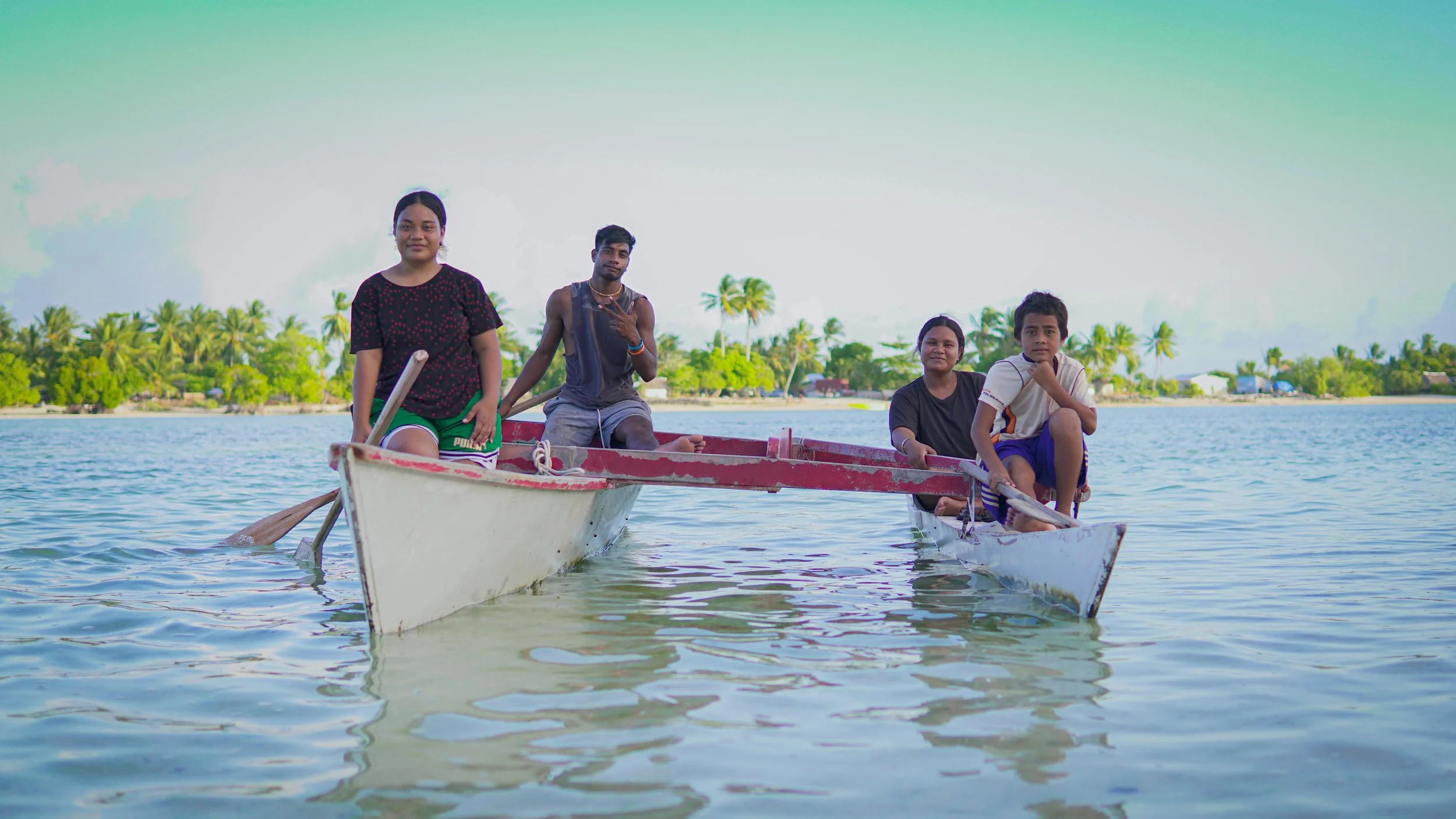
The main body is crafted with timber and is held together by strong and sturdy rope made from the coconut husk. All canoes have outriggers that are attached to the side which keeps the vessel steady in stormy seas.
Can you see the outrigger on the picture?
If you would like to see more pictures of a canoe, you can look HERE.
CAN YOU BUILD A CANOE USING YOUR BODIES?
Using just your bodies, can you make a canoe inspired by the illustration of a traditional canoe? You could do this as a whole class or in smaller groups.
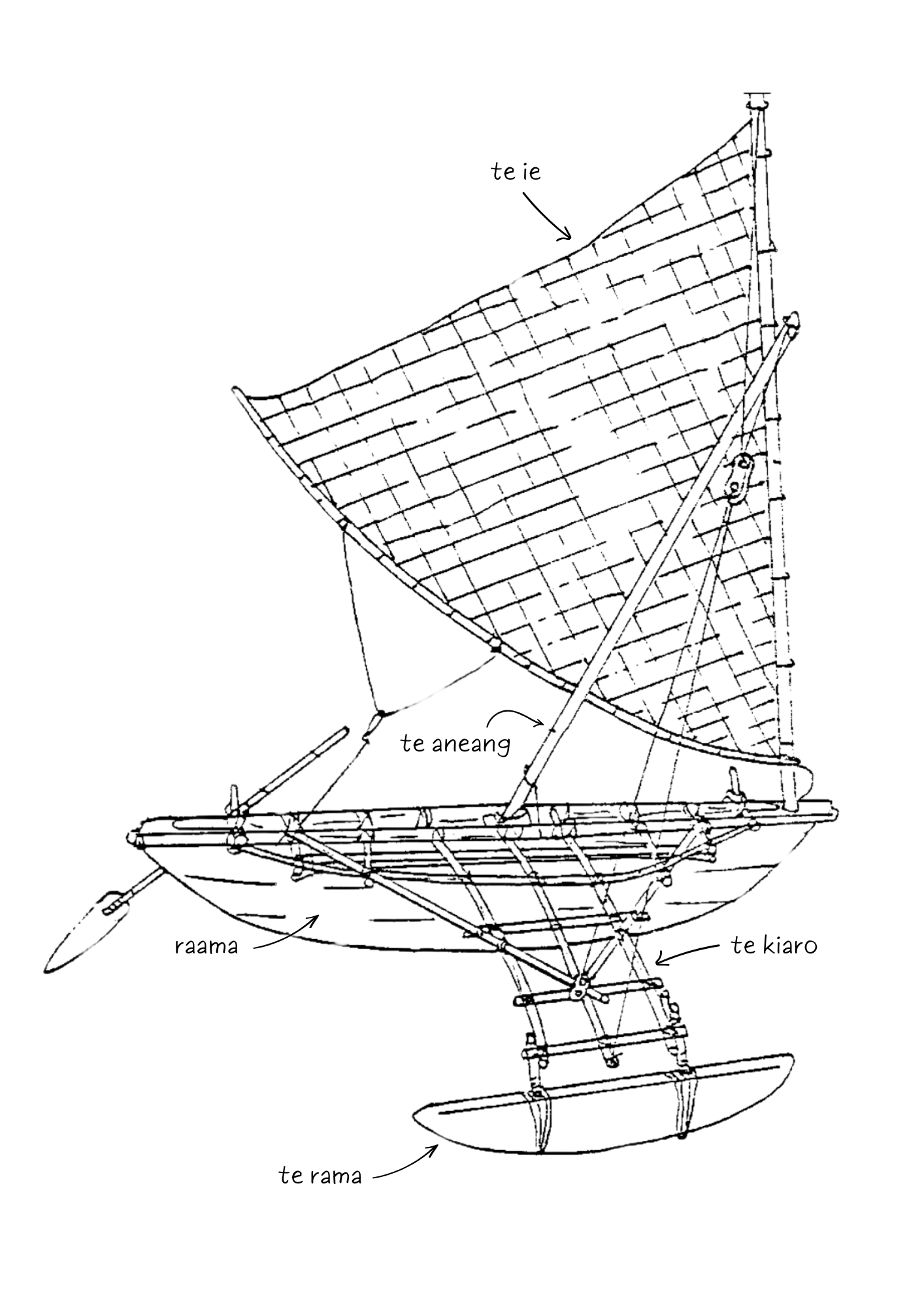
Image credit: Communication and Culture Handbook, Peace Corps Language Handbook Series, 1979
In groups of 4 - 5, find a space in the room, sitting in single file behind each other. Now you’re in your very own canoe.
In Kiribati, canoes are like a best friend or a family member - and just like a member of a family, every canoe must have a name!
Sometimes people name their canoes after a dream, but you don’t have time for napping!
In your group create a name for your canoe using the 13 letters of the Kiribati alphabet.
You can use some or all of the letters.
A E I, O U M, N B K, R T W and NG
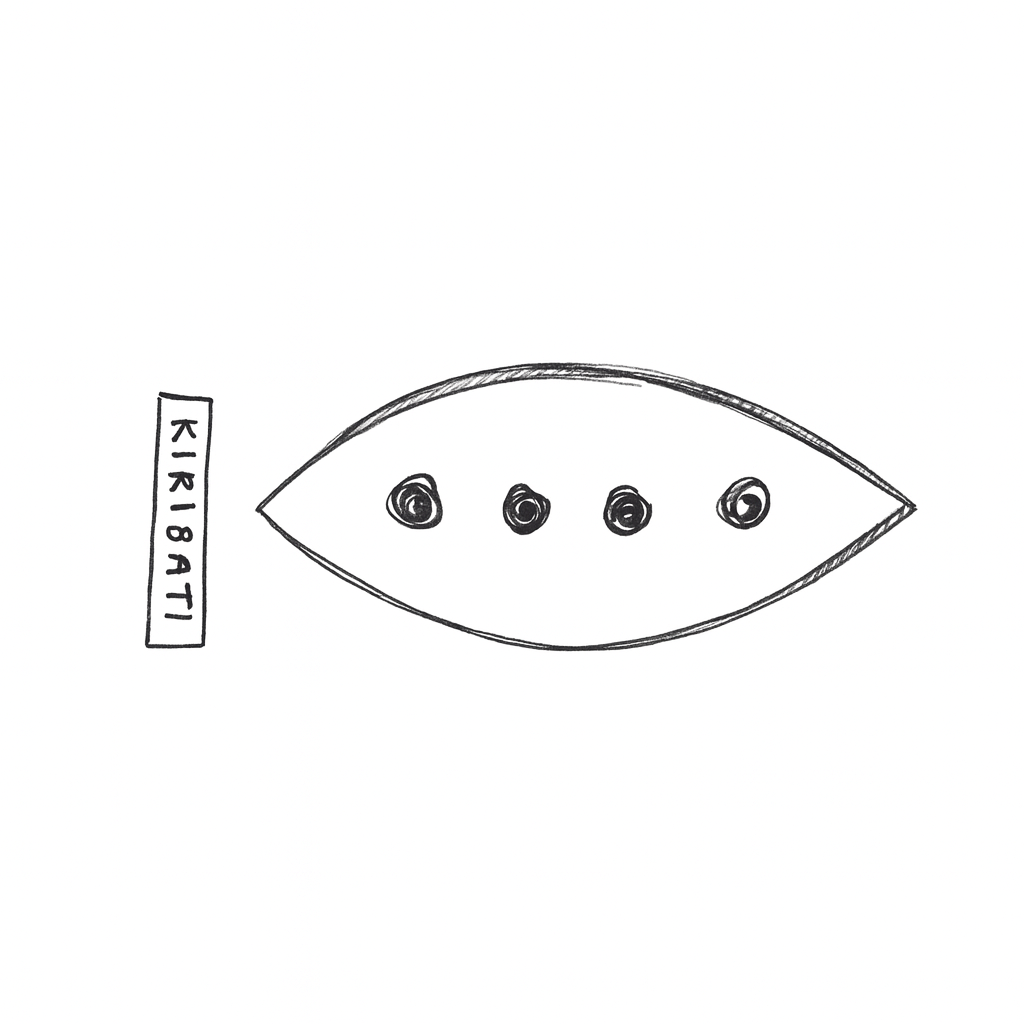
NAME YOUR CANOE, AND GATHER YOUR CREW!
Write the name of your canoe on a piece of paper (you can decorate it if you have time) and have it ready to place at the front of your canoe when you start your adventure with Nei Kinoia.
A E I O U M N B K R T W and NG
A E I O U M N B K R T W and NG

LET’S SPIN MAGIC TOGETHER
NEI KINOIA WANTS TO TEACH YOU A LITTLE BIT OF MAGIC TO HELP THE CANOE FLY!
In case you missed it - there is a teachers note about Magic & The Spirits in Kiribati that you might like to read.
NEI KINOIA NEEDS TO COME WITH YOU!
Nei Kinoia is worried about the Spirits seeing her, so you’ll need to hide her in something you can take on your canoes with you.
In your canoe groups find something in your classroom that you can use to represent her on this adventure - it could be a stuffed toy, pencil case, even a coconut if you have one!
You’ll need to make sure you have her with you for every episode.
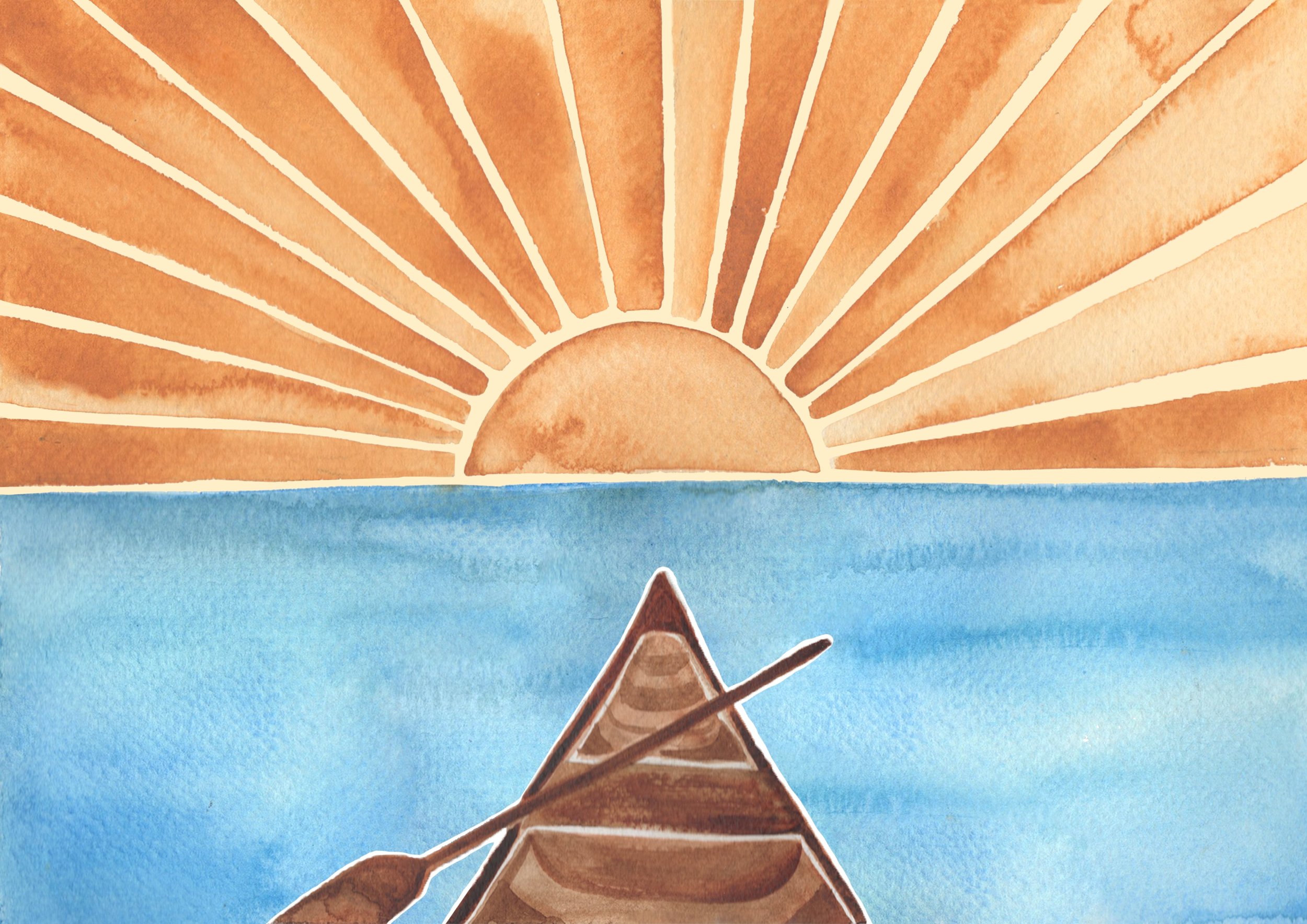
NOW… IT’S TIME TO JUMP INTO YOUR CANOES!
EPISODE CHECKLIST:
Set up your canoe, with your canoe name at the front
Check everyone is in their place in the canoe
Check your navigation points (North, South, Ocean side, Lagoon side)
Put your speakers on the Lagoon side if you can
Make sure you have Kinoia carefully concealed
Make sure you have your floral gifts for the Spirit (here’s the link if you need it!)
Practice your magic spinning! Na Ko Ep!



EPISODE TWO:
THERE’S LAND AHOYA!

-
While Marita was visiting Kiribati, her daughter, Matari kept a diary of her adventures.
<CLICK HERE> to see some of her journal entries.
Like Matari, use the adventure journal template to draw and/or write an immediate response to the episode. To access the journal template <CLICK HERE>
Share responses with teacher, elbow buddy, table group and class.
After each episode, add to your journal so you have a collection of your experience in Kiribati at the end of the adventure.
The adventure journal can also be used as a workbook to collect your responses to the learning experiences.
CURRICULUM LINKS:
English: AC9E1LE02 Discuss literary texts and share responses by making connections with students’ own experiences
AC9E2LE02 Identify features of literary texts, such as characters and settings, and give reasons for personal preferences
The Arts / Drama: AC9ADR2E01 Explore where, why and how people across cultures, communities and/or other contexts experience drama
-
Discuss what is rhyming.
Did you hear the rhyming in the episode?
“Listen close everyone, keep your eyes a-peel
This canoe will fly, with honour and zeal!”
“Look to the north and tilt to the sea
Follow the line where the frigate roams free!
Lean to the other side and fly beyond south,
The lagoon of Neiko will open its mouth!”
<CLICK HERE> for PDF version of the rhyming words.
Choose one of the rhymes to speak as a class.
Can you identify the rhyming words?
How do you know they are the rhyming words?
Work collaboratively to create a movement/dance piece to the rhyme utilising simple movement and gestures.
The movement piece might be inspired by or an extension of Nei Kinoia’s movement she uses in her magic spinning.
Consider your use of the Elements of Dance and Drama as you create your piece:
Elements of Dance: space, time, dynamics and relationships
Elements of Drama: movement, space and time
You could choose an accompanying piece of instrumental music to reflect and enhance the mood of the movement piece. <CLICK HERE> to play a song performed by the Kiribati community here in Australia.
Perform your rhyme movement piece to other class members or another Year 1-2 class.
CURRICULUM LINKS:
English
AC9E1LE04 Listen to and discuss poems, chants, rhymes and songs, and imitate and invent sound patterns including alliteration and rhyme
AC9E1LA04 Explore how repetition, rhyme and rhythm create cohesion in simple poems, chants and songs
AC9E2LE04 Identify, reproduce and experiment with rhythmic sound and word patterns in poems, chants, rhymes or songs
The Arts / Dance: AC9ADA2E01 Explore where, why and how people across cultures, communities and/or other contexts experience dance
AC9ADA2D01 Experiment with ways to move safely and expressively using fundamental movement skills and the elements of dance
AC9ADA2C01 Use the elements of dance to choregraph dance sequences
AC9ADA2P01 Share dance sequences in informal settings
The Arts / Drama: AC0ADR2E01 Explore where, why and how people across cultures, communities and/or other contexts experience drama
AC9ADR2D01 Use the elements of drama and imagination in drama play and/or process drama
AC9ADR2C01 Create and co-create fictional situations based on imagination and/or experience
AC9ADR2P01 Share their drama in informal settings

READY TO MOVE ON TO EPISODE THREE?
CLICK ON THE CRAB!