WELCOME BACK ADVENTURERS!
WE MEET AGAIN! LETS GET READY FOR OUR VISIT TO THE SPIRIT OF THE SOUTH!

ROUND AND ROUND AND ROUND WE GO.
-
Theme: All together now
Hermit crabs are everywhere in Kiribati and while they are timid creatures, once they are out of their shell, they are fast and don’t mind being sung to!
Do you know why Hermit Crabs are called Hermit Crabs? If you don’t, perhaps you would like to do some investigating before you play Hermit Crab footsteps.
The game, Hermit Crab footsteps is an adaptation of the game, Grandmother’s Footsteps.
In an open space, have one person stand at one end of the space. They are the shell.
Everyone else stands at the other end of the space, face the shell, and transform your body into a scuttling hermit crab.
The shell turns their back to the crabs. The crabs take the opportunity to scuttle towards the shell. At any time, the shell turns to face the crabs. If any of the crabs are caught moving, they are sent scuttling back to the beginning.
The game continues until one of the crabs make it to the shell and a new game commences.
CURRICULUM LINKS:
Health and Physical Education: AC9HPFM02 Experiment with different ways of moving their body safely and manipulating objects and space
Science: AC9SFU01 Observe external features of plants and animals and describe ways they can be grouped based on these features
The Arts /Drama: AC9ADRFD01 Use play, imagination, arts knowledge, processes and/or skills to discover possibilities and develop ideas

A DAY IN THE LIFE OF A KIRIBATI KID
Families and houses in Kiribati might be the same or different to where and how you and your family live.
-
Themes: We use the things we have in reach; All together now
Watch the video of Tabuia to see what his house looks like, who lives with him and what jobs he has to do at home.
Like in the canoe, everyone in the family has a role to play and do special jobs.
Make a table so you can write down and discuss the differences / similarities between your family life and Tabuia’s family life.
Do you have any special jobs you have to do at home?
In small groups or as a class, think of a job you have to do at home. For example, emptying the dishwasher, putting the bins out for collection, or cleaning your room.
Taking a turn at a time using no words (but you can use sound effects!), act out your job for your classmates to guess.
The person who guesses correctly can have the next go.
CURRICULUM LINKS:
English: AC9EFLA01 Explore how language is used differently at home and school depending on the relationships between people; for example, between a parent and child, a teacher and students
Science: AC9SF103 Represent observations in provided templates and identify patterns with guidance
Health and Physical Education: AC9HPF01 Investigate who they are and the people in their world
Design and Technologies: AC9TDEFK01 Explore how familiar products, services and environments are designed by people
The Arts / Drama: AC9ADRF01 Use play, imagination, arts knowledge, processes and/or skills to discover possibilities and develop ideas
AC9ADRFC01 Create arts works that communicate ideas
Tabuia lives with his Grandparents. Who lives at home with you? What is your relationship like with the older members of your family?

FAMILY AND KIRIBATI CULTURE
Families are part of a bigger community in Kiribati. Watch the video of Ariteti as she talks about how elders in the Kiribati community are cared for, and how traditional skills are passed down through generations.
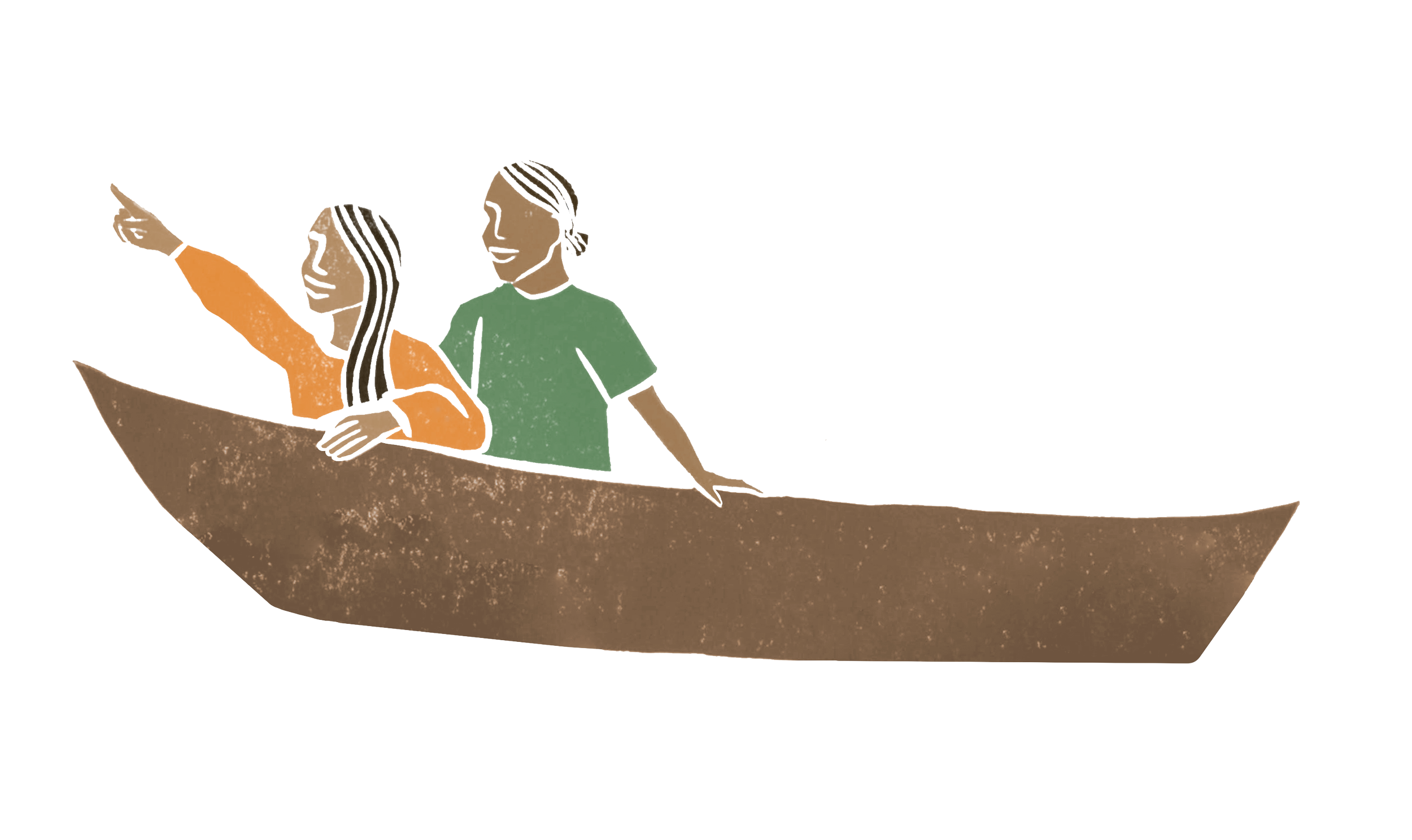
It’s time to jump back into your Canoes!
EPISODE CHECKLIST:
Set up your canoes
Check everyone is in their place in the canoes
Check your navigation points (North, South, Ocean side and Lagoon side)
Place your speakers on the Ocean side if you can
Make sure you have Kinoia carefully concealed
Make sure you have your gifts for the Spirit



EPISODE FOUR:
ROUND AND ROUND AND ROUND WE GO!

-
In their ‘The Flying Canoe’ adventure journal, students draw and/or write an immediate response to the episode.
Share with teacher, elbow buddy, table group, and class.
CURRICULUM LINKS:
English: AC9EFLE02 Respond to stories and share feelings and thoughts about their events and characters
Health and Physical Education: AC9HPFP03 Express and describe emotions they experience
The Arts / Drama: AC9ADRFE01 Explore how and why the arts are important for people and communities.

WHAT DOES A KIRIBATI KID DO FOR FUN?
-
Theme: We use the things we have in reach
With your elbow buddy, collect different sized shells and various objects and:
predict which shells / objects might be best for spinning?
experiment with spinning these shells / objects, exploring:
how they moved
how their size and shape influenced how well they spun
play a game of spinning objects, keeping a record of how long you can spin shells and/or other objects.
At the end, discuss with your table group and/or as a class:
how the different objects moved
how the size and shape of the shells / objects influenced their movement
how the outcome of the experiment compared with your predictions
CURRICULUM LINKS:
Science: AC9SFU02 Describe how objects move and how factors including their size, shape or material influence their movement
AC9SF101 Pose questions and make predictions based on experiences
AC9SF102 Engage in investigations safely and make observations using their senses
Design and Technologies: AC9TDEFP01 Generate, communicate and evaluate design ideas, and use materials, equipment and steps to safely make a solution for a purpose
-
Themes: We use the things we have in reach; We are surrounded by the ocean; The canoe
One of the games Kiribati children like to play, is making boats to sail in puddles. Writer of ‘The Flying Canoe’, Marita Davies describes the significance of the game in this article.
Using materials found in the classroom:
make predictions about what materials might make the best sailing boat
make your own boat and test its ability to sail
discuss the outcomes of your findings
CURRICULUM LINKS:
Science: AC9SFU02 Describe how objects move and how factors including their size, shape or material influence their movement
AC9SF101 Pose questions and make predictions based on experiences
AC9SF102 Engage in investigations safely and make observations using their senses
Design and Technologies: AC9TDEFP01 Generate, communicate and evaluate design ideas, and use materials, equipment and steps to safely make a solution for a purpose
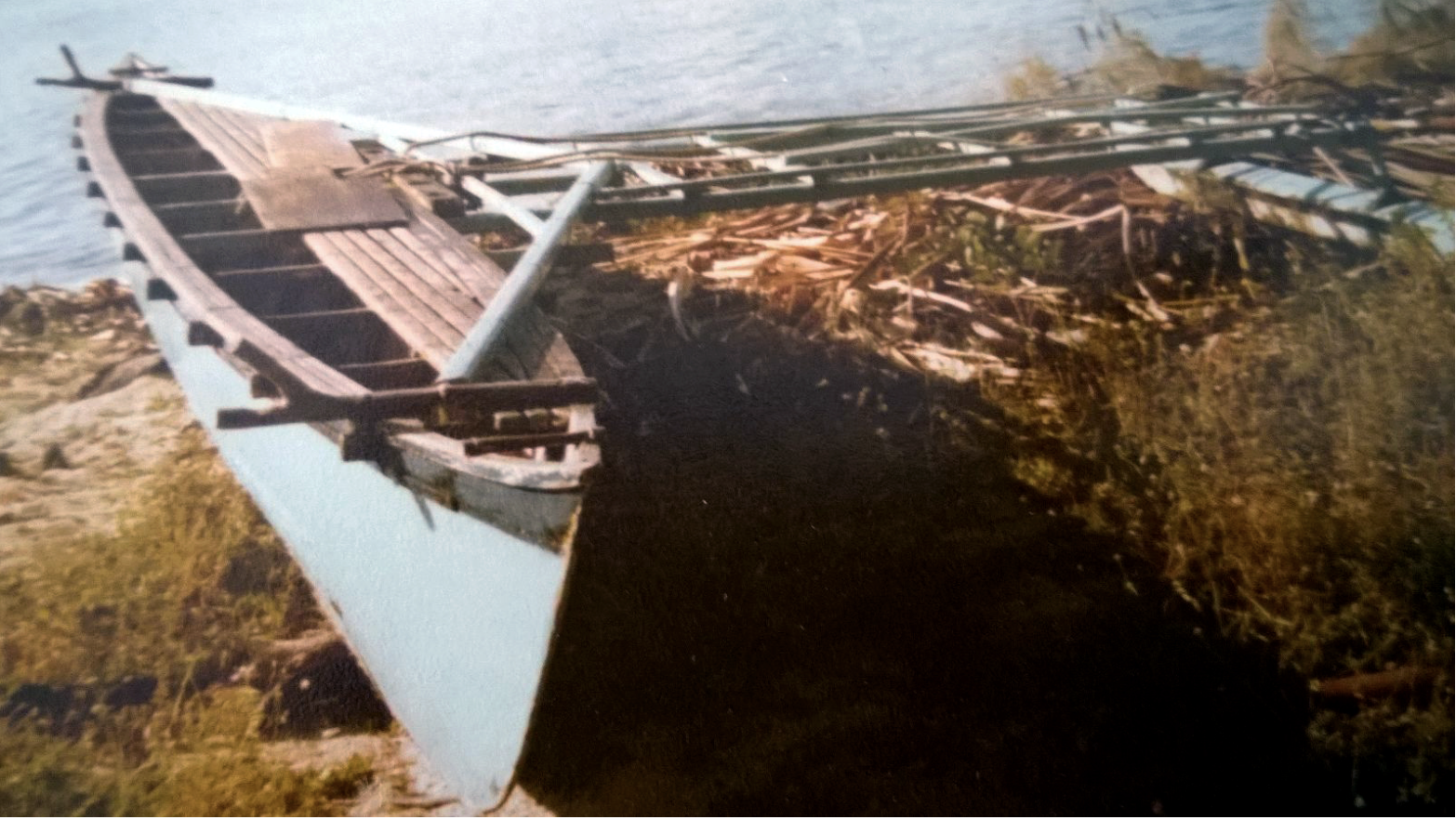
“These mini boats are made from whatever their creators can get their hands on: soft drink cans, plastic water bottles, pandana leaves or random pieces of discarded plastic.
While simple at first, the construction and thought process in creating these tiny vessels are beyond the years of their makers. Laughing and splashing in the puddles while they watch these tiny sailboats race, the Kiribati kids create boats with surprising agility and balance. ”
READY TO MOVE ON TO EPISODE FIVE?
CLICK ON THE CRAB!