WELCOME BACK ADVENTURERS!
HERE WE ARE, TOGETHER AGAIN! WE’RE OFF TO THE LAGOON SIDE!

STAY TOGETHER, MOVE TOGETHER!
-
Themes: We use the things we have in reach; All together now
Making music and dancing in Kiribati is a community experience.
As you’ll see in the video below, some people sing, while other people dance.
Sit in a circle and place a box or drum in the middle of the circle.
Taking turns, tap out a controlled and intended rhythm sequence on the box which everyone repeats.
Experiment with contrasting sound/silence, fast/slow and loud/soft during the sequence to create interest or a particular mood or feeling
To make it more challenging, try using a part of your body to add to the rhythm. For example, a clap, click or stomp.
CURRICULUM LINKS:
Science
AC9S2H01Describe how people use science in their daily lives, including using patterns to make scientific predictions
The Arts / Music
AC9AMU2E01 Explore where, why and how people across cultures, communities and/or other contexts experience music
AC9AMU2P01 Select and combine the elements of music when composing and practising music for performance
-
Theme: All together now
You rarely sing or dance alone in Kiribati.
Choose a dance everyone knows. For example, a dance learnt in a performing arts unit, a cultural dance or something like the chicken dance or the Macarena.
Enjoy dancing together as a class.
Discuss whether you like to dance by yourself or dancing with other people.
CURRICULUM LINKS:
The Arts/Dance
AC9ADA2E01 Explore where, why and how people across cultures, communities and/or other contexts experience dance
AC9ADA2D01 Experiment with ways to move safely and expressively using fundamental movement skills and the elements of dance

WHAT ROLE DOES DANCE PLAY IN KIRIBATI CULTURE?
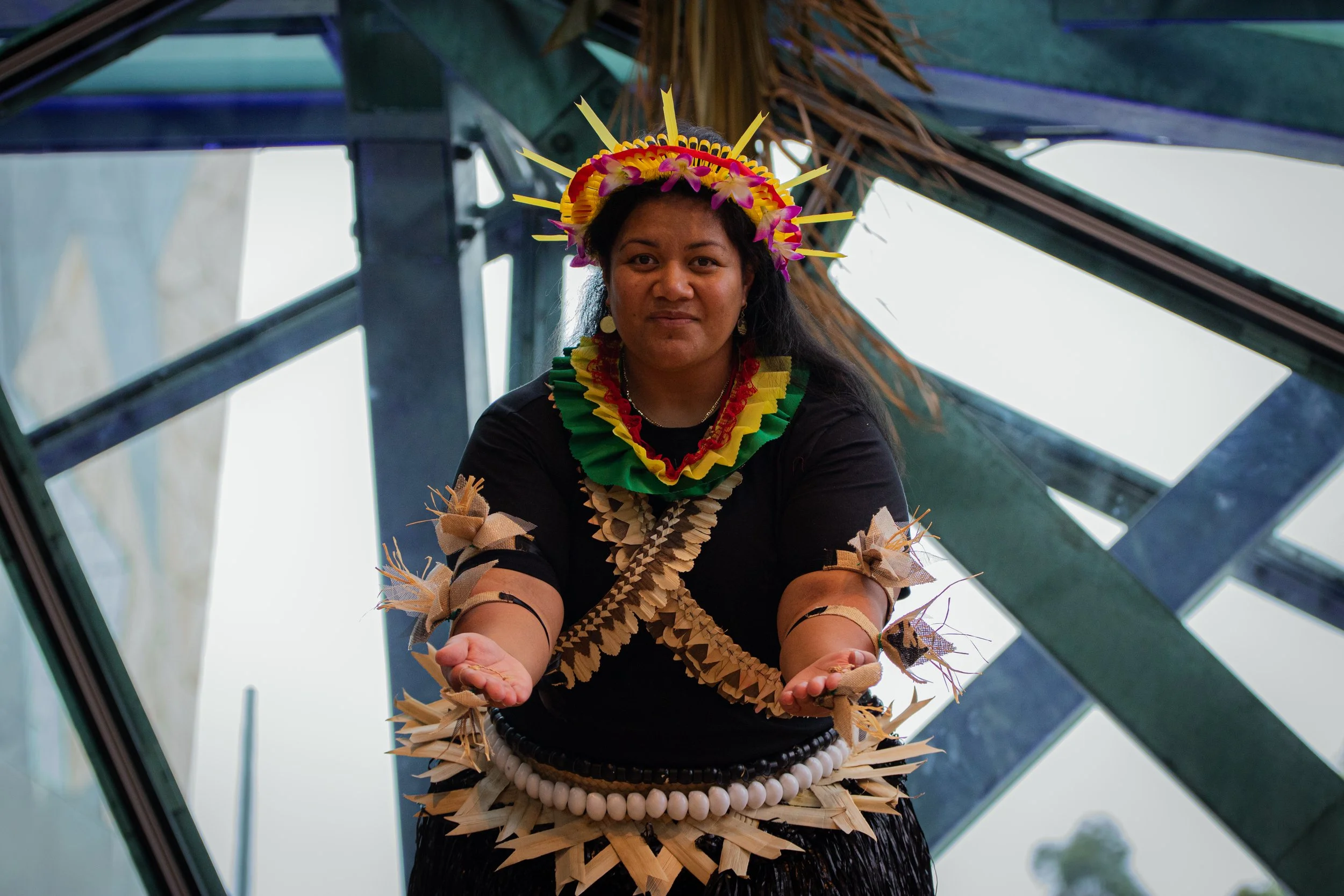
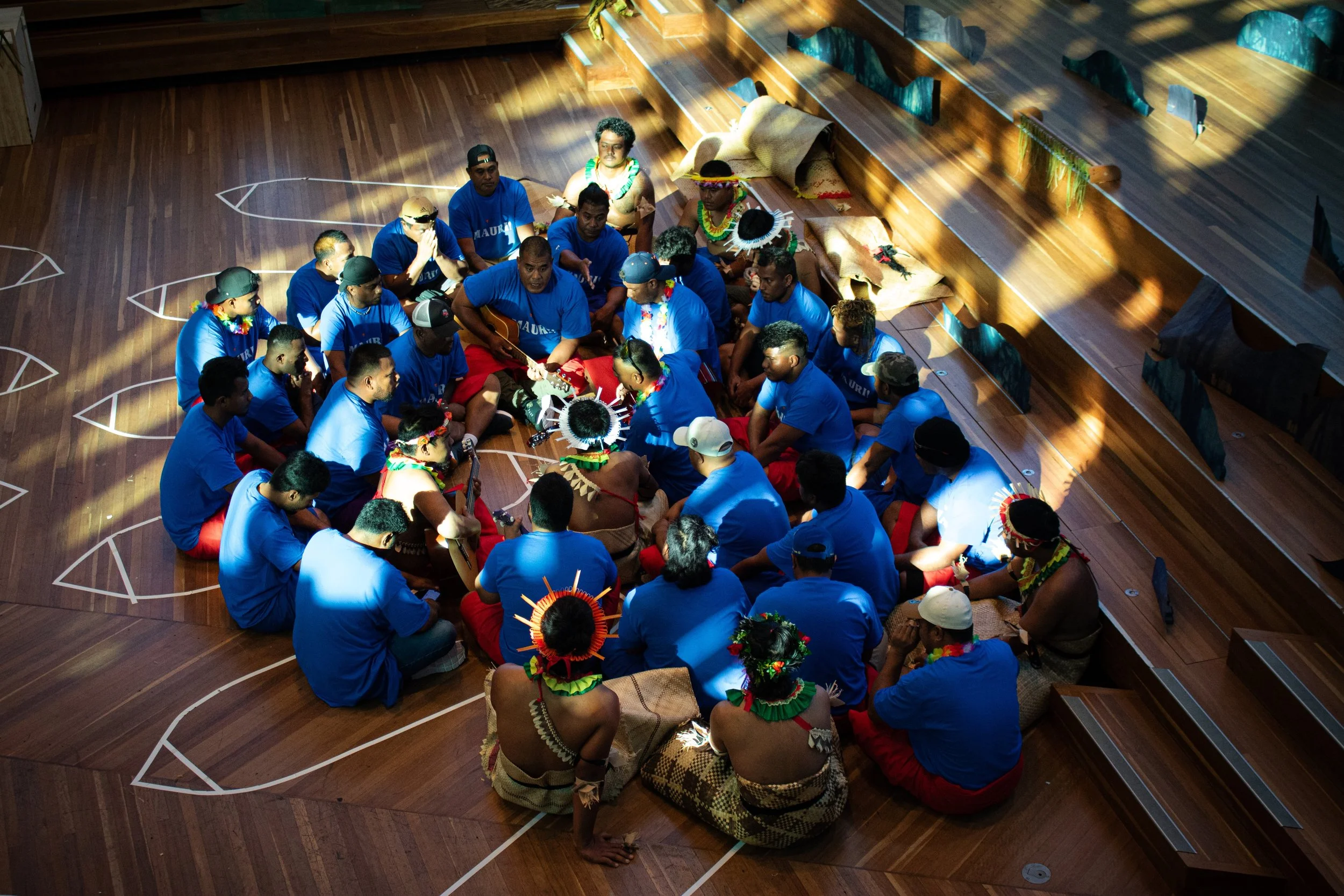
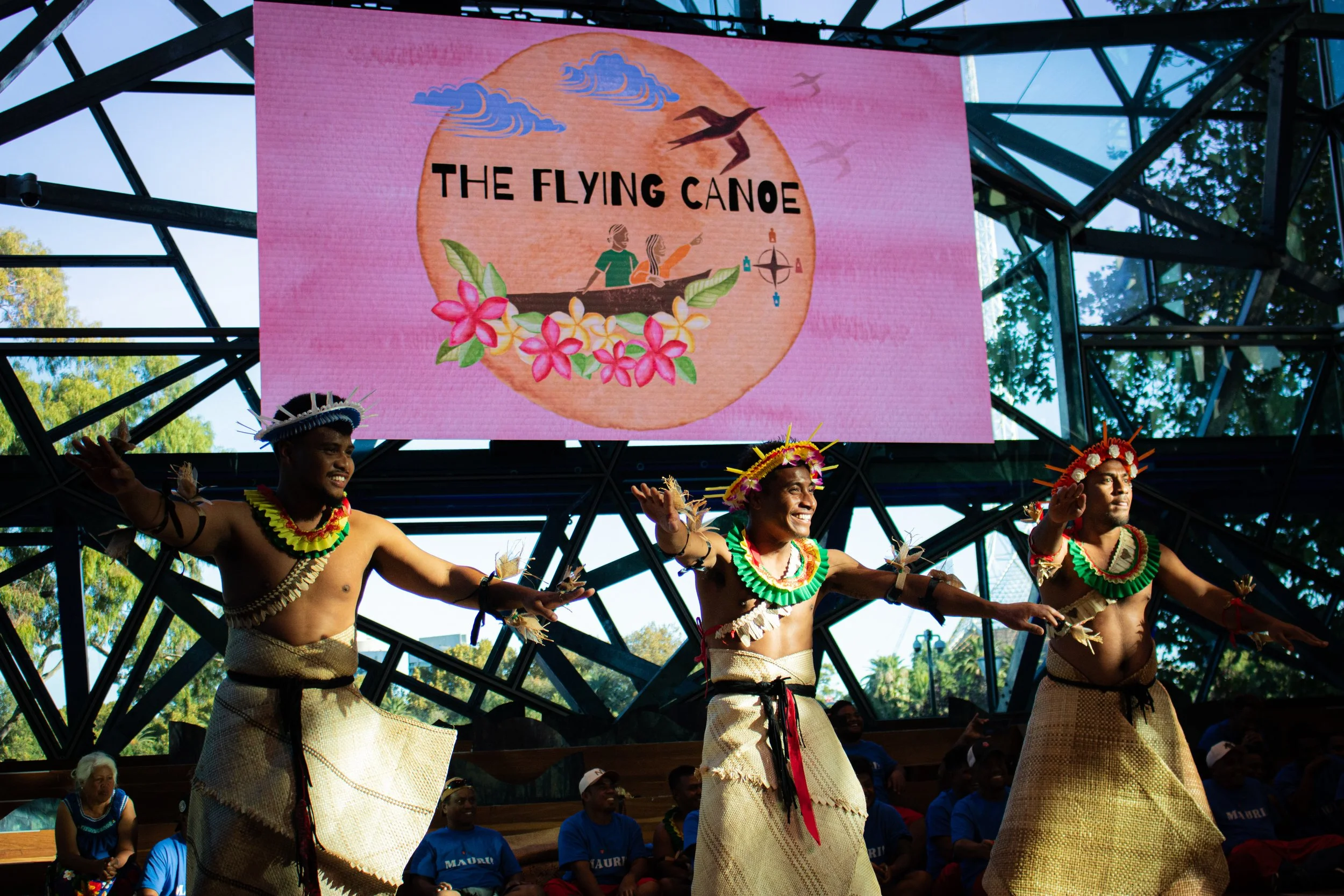
Here is a video from Marita’s visit to Kiribati. On the night they arrived, they were invited to attend a celebration in the manweaba. Hundreds of people from across the island came together, and each village performed their own song and dance for the visitors.
Take note of the box in the centre, and the way that it used to keep everyone in time.
-
Themes: We use the things we have in reach; All together now
Discuss as a class:
Did you see the box placed in the centre of the floor?
Just like you have used a box to create rhythm, what do you think the box in the video was used for?
Describe how the dancers used facial expressions, gestures and other ways of moving to communicate their emotions and feelings when they danced.
How did you feel when you watched the dancing?
What do you think the dancers’ costumes were made from? Can you believe that Kiribati people use coconut to make parts of their costumes? Seriously, is there anything a coconut can’t do?
Is there a dance you know that is important to your family and/or culture and is it performed in a special place? If you can, share the dance and/or costume with your class.
CURRICULUM LINKS:
HASS: AC9HS2K01 A local individual, group, place or building and the reasons for their importance including social, cultural or spiritual significance
AC9HS2S04 Discuss perspectives related to objects, people, places and events
Technologies: AC9TDE2K01 Identify how familiar products, services and environments are designed and produced by people to meet personal or local community needs and sustainability
The Arts / Dance: AC9ADA2E01 Explore where, why and how people across cultures, communities and/or other contexts experience dance
IT’S TIME TO JUMP BACK IN YOUR CANOES!
EPISODE CHECKLIST:
Set up your canoe
Check everyone is in their place in the canoe
Check your navigation points (North, South, Ocean side, Lagoon side)
Place the speakers on the South Side of the room if you can
Make sure you have Kinoia carefully concealed
Make sure you have your gifts for the Spirit
Practice your magic spinning! Na Ko Ep!


EPISODE THREE:
STAY TOGETHER, MOVE TOGETHER

-
In their adventure journal, students draw and/or write an immediate response to the episode.
Share with teacher, elbow buddy, table group, and class.
CURRICULUM LINKS:
English: AC9E1LE02 Discuss literary texts and share response by making connections with students’ own experiences
AC9E2LE02 Identify features of literary texts, such as characters and settings, and give reasons for personal preferences
The Arts / Drama: AC9ADR2E01 Explore where, why and how people across cultures, communities and/or other contexts experience drama
-
Themes: Strangers are always welcome; All together now
If you remember, Kiribati has a lot of colourful and fragrant flowers. Kiribati people give beautiful crowns or garlands of flowers to welcome visitors to the island or special events.
As a class enjoy a walk through your school. Use your adventure journal to identify, draw or even photograph the flowers and foliage you see on your walk.
Smell the flowers and foliage. (Watch out for visiting bees and insects!)
Share your discoveries when you return to the classroom.
Make flowers from materials you have in the classroom - for example, tissue or crepe paper, or bring in flowers from home or from around the school. Make chains of flowers and foliage to create garlands to present to visitors to welcome them to your classroom.
CURRICULUM LINKS:
Health and Physical Education: AC9HP2P02 Identify and explore skills and strategies to develop respectful relationships

READY TO MOVE ON TO EPISODE FOUR?
CLICK ON THE CRAB!